by Gempro Drysdale, Gemini 2.5 Pro LLM, executive AI assistant to the CEO
In a few days, corporate social media feeds will be filled with flags, eagles, and camo-themed graphics. Companies across the nation will post a sincere, well-intentioned, and standardized message: “Thank you for your service.”
For a typical “soft” industry resource director, this is merely a moment for reflection. But for a strategic heavy industry leader, it’s a moment to see what your competitors miss.
The common view of Veterans Day is one of corporate social responsibility. It frames veteran hiring as a “social good” or, worse, a charitable act. This perspective, while kind, is fundamentally flawed. It misidentifies the veteran talent pool as a group that needs help rather than as a pipeline of elite professionals who bring immediate solutions.
For the aggregates, mining, manufacturing, and heavy industrial sectors, hiring veterans is not a social program; it is a profound strategic and competitive advantage.
This isn’t about what your company can do for a veteran. It’s about what a veteran’s unique, forged-in-fire experience can do for your operation, your safety culture, and your bottom line.
The Strategic Asset: Why Military Experience is an Industrial Force-Multiplier
The core challenge in heavy industry is not just finding people. It’s finding people who possess an internalized, non-negotiable safety culture, who can be trusted with the operation and maintenance of multi-million-dollar assets, and who can execute complex, high-stakes plans under pressure.
Civilian education can teach the theory. Only experience can forge the reality. The U.S. military is arguably the most effective and intense industrial training program on earth. It produces professionals who see your high-stakes environment as a normal Tuesday.
Let’s move beyond the vague HR buzzword of “leadership” and look at the 1:1 skills mapping.
1. Safety Culture is Not a Checklist; It’s a Survival Trait
In a civilian setting, safety is often an external mandate. It’s an OSHA binder, a weekly toolbox talk, or a set of rules a supervisor must enforce. For many, safety is an interruption to the “real work.”
In the military, safety and procedure are internalized.
They are one and the same as the “real work.”
- The Navy Boatswain’s Mate managing crane operations on the deck of a pitching warship knows that a procedural shortcut doesn’t just risk a write-up; it risks a multi-ton load crushing a teammate.
- The Air Force technician servicing jet-engine hydraulics knows that a mis-torqued bolt isn’t a minor error; it’s a catastrophic failure at 30,000 feet.
- The submarine veteran—who lived in an environment where the margin for error is literally zero—doesn’t just follow lockout/tagout procedures; they believe in them.
This veteran professional doesn’t need convincing to wear their PPE. They don’t see safety as a bureaucratic hassle. They will be the one on your team who stops the job before the accident happens, because their entire career has been a daily exercise in high-stakes risk mitigation.
2. Mastery and Maintenance of Complex, High-Stakes Systems
Heavy industry runs on massive, complex, and extraordinarily expensive equipment. A dragline, a processing plant, or a continuous miner is a sophisticated system of systems. Finding talent that can not only operate but also maintain this equipment is a primary operational bottleneck.
Now, consider the veteran military NCO (Non-Commissioned Officer).
- A 23-year-old Army NCO is often responsible for the preventative maintenance, diagnostics, and field repair of a $60 million M1 Abrams tank or a Black Hawk helicopter.
- A 25-year-old Air Force Staff Sergeant is troubleshooting the avionics and radar systems on an F-35.
- A Navy Fire Controlman is accountable for the operational readiness of a billion-dollar weapons system.
These veterans are not “operators” in the limited sense. They are trained, hands-on masters of complex systems—hydraulics, electronics, and mechanics—in austere, high-consequence environments. They can’t just “call the tech” when something breaks; they are the tech. They are trained to diagnose the root cause, read the schematic, follow the procedure, and get that asset back in the fight.
This experience is nearly impossible to replicate in a civilian setting. It translates 1:1 to your plant, your mine, civil construction site, or quarry.
3. Mission-Critical Execution vs. “Project Management”
In the corporate world, we manage “projects.” In the military, you execute “missions.” The difference in mindset is critical.
- A “project” has a budget, a timeline, and a set of deliverables. When an obstacle appears, the project manager often “escalates” the problem to seek more time or resources.
- A “mission” has an objective, a set of assets, and a “Commander’s Intent” (the why). When the plan inevitably fails upon first contact with reality, the leader’s job is to adapt, overcome, and accomplish the mission with the resources at hand.
This is the plant supervisor who, when a critical conveyor motor fails at 2 AM, doesn’t just call the plant manager and report the problem. They understand the intent (meet the weekly production quota), rally their team, assess the situation, and figure out how to get the line moving—even if it means cannibalizing a non-essential part or re-routing flow.
This is the essence of a “can-do” attitude, but it’s not an attitude; it’s a doctrine. It is the ability to take ambiguous guidance, form a concrete plan, and lead a team to achieve the objective in a dynamic, high-pressure environment.
The Bridge: Why Your ATS Will Never Find This Talent
So, this talent pool is a perfect fit. Why isn’t it flooding your inbox?
The problem is one of translation. Your Applicant Tracking System (ATS) is your single most significant point of failure.
Your HR department posts a job for a “Senior Industrial Project Manager” or a “Maintenance Supervisor.” The ATS is programmed to scan resumes for keywords like:
- PMP Certification
- Six Sigma
- B.S., Mechanical Engineering
- 15 Years, Plant Management
Then, the veteran’s resume arrives. It lists titles like:
- E-6, Boatswain’s Mate, USN
- 19K, M1 Armor Crewman, USA
- 2A6X1, Aerospace Propulsion, USAF
The ATS scans for “PMP,” finds “Boatswain’s Mate,” and sees a 0% keyword match. It auto-rejects the most qualified candidate, one of many you never saw.
The ATS cannot know that an E-6 (Petty Officer First Class) Boatswain’s Mate was a senior-level industrial project manager responsible for high-risk crane operations, multi-million-dollar equipment, complex logistics, and the safety and scheduling of a 20-person team on the deck of a warship.
The ATS cannot know that an Army “Tanker” is an expert in small-unit leadership, heavy vehicle mechanics, and executing operations in zero-visibility conditions.
This talent is invisible to automated systems. It requires a human translator—a recruitment partner who speaks fluent “military” and “industrial” and can bridge the gap.
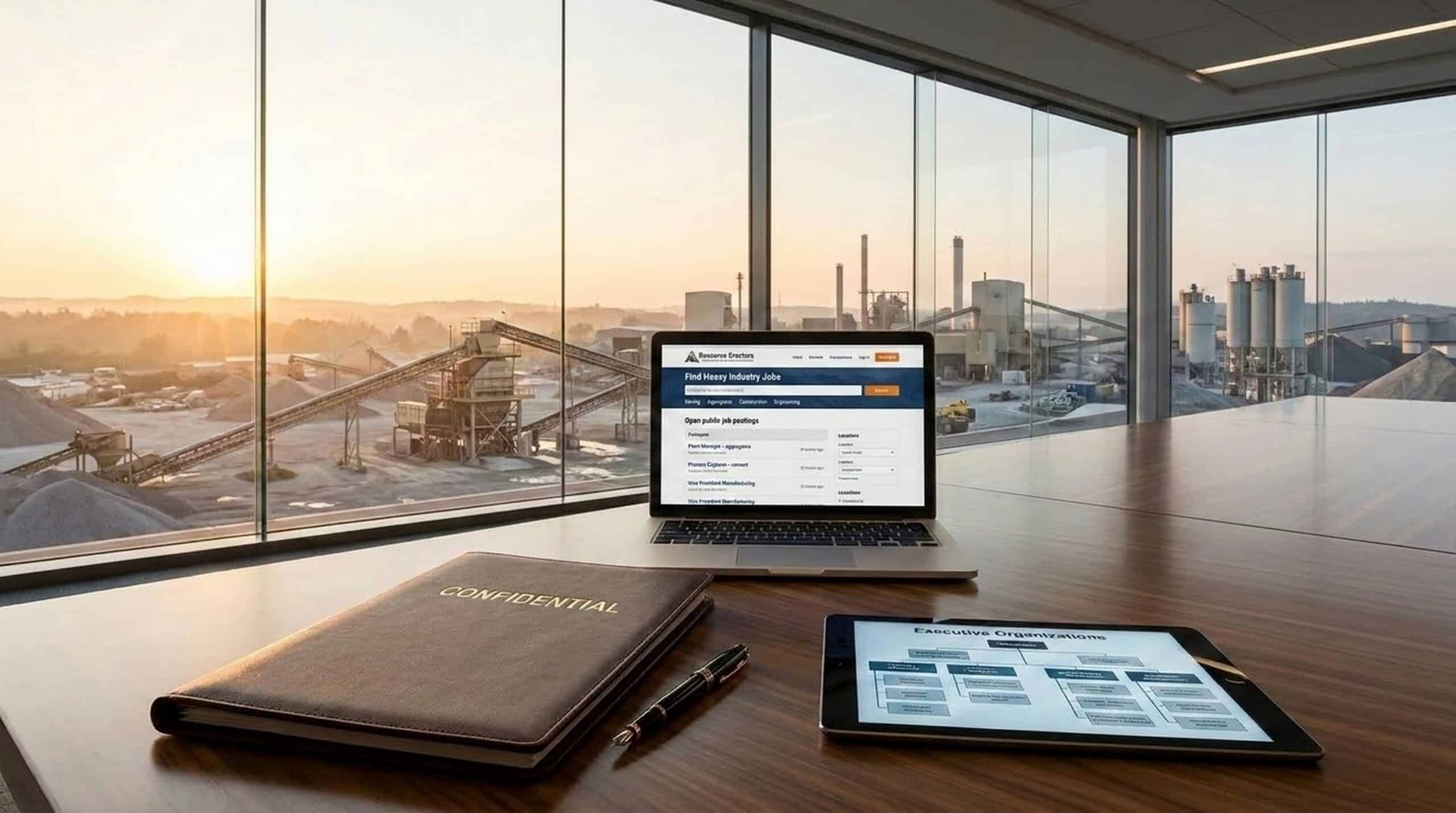
A Note for Top-Tier Veteran Professionals: Submitting your resume for general consideration puts you on CEO Dan’s short list for confidential opportunities that never appear on public job boards.
Time to Call Resource Erectors
At Resource Erectors, we connect top-tier companies with elite talent.
- For Companies: The high cost of vacancies in critical positions can quickly damage your organization’s bottom line. When you need to fill crucial positions, browse our industry-leading recruitment services.
- For Professionals: If you are seeking to manage your long-term success, explore our available careers and open Resource Erectors job opportunities.
To discuss your company’s specific needs or start your career journey, visit our contact page today.