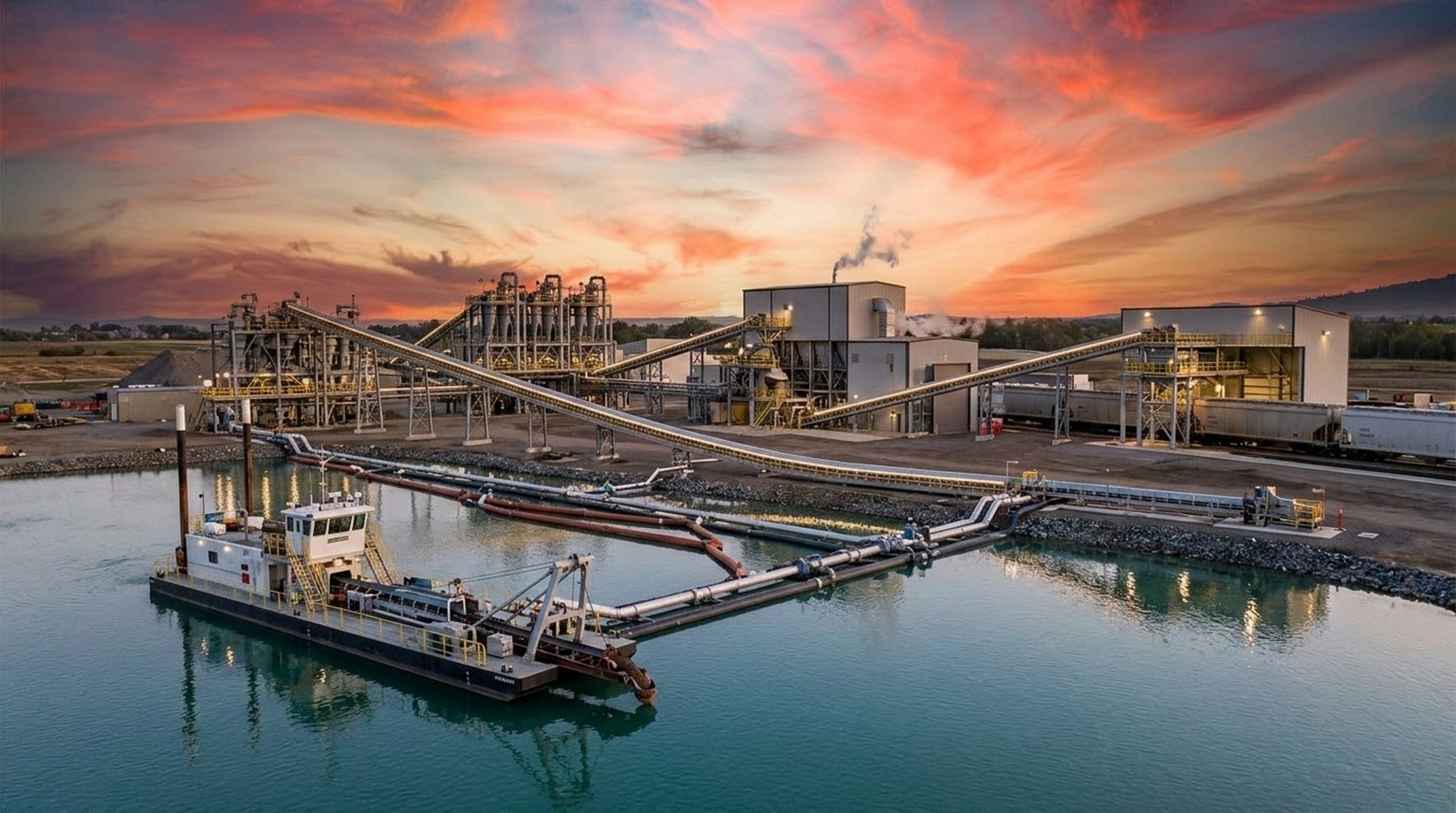
In capital project management across the heavy industrial and mineral processing sectors, success is measured by two primary metrics: speed and safety. When a producer deploys millions of dollars to build a new wet processing facility or remodel an aging aggregate plant, any delay can stall downstream supply chains and wipe out projected profit margins.
However, accelerating a project timeline can never come at the expense of regulatory compliance or human safety. For operations governed by the Mine Safety and Health Administration (MSHA), a specific legal framework dictates exactly how field personnel and contractors must be managed on-site: 30 CFR Part 46.
For a high-level engineering leader, understanding this regulation isn’t just a legal checkbox. It is an essential asset for delivering complex plant builds on schedule, on budget, and completely free of regulatory shutdowns.
Decoding 30 CFR Part 46: Who, What, and Why?
To effectively manage a modern mineral processing development, an engineering manager must know the boundaries of MSHA jurisdiction. While Part 48 covers underground operations and surface metal or coal sites, Part 46 applies strictly to surface non-metal operations. This includes sand, gravel, surface stone, clay, colloidal phosphate, and surface limestone mines.
The core philosophy of Part 46 is that federal law requires all personnel exposed to the hazards of a surface mining environment to be thoroughly trained before they set foot on the property. This encompasses two major groups:
- Full-Time Miners: Regular facility employees responsible for extraction and material handling.
- Independent Contractors: The construction crews, millwrights, ironworkers, and electricians brought on-site to build, remodel, or upgrade processing infrastructure.
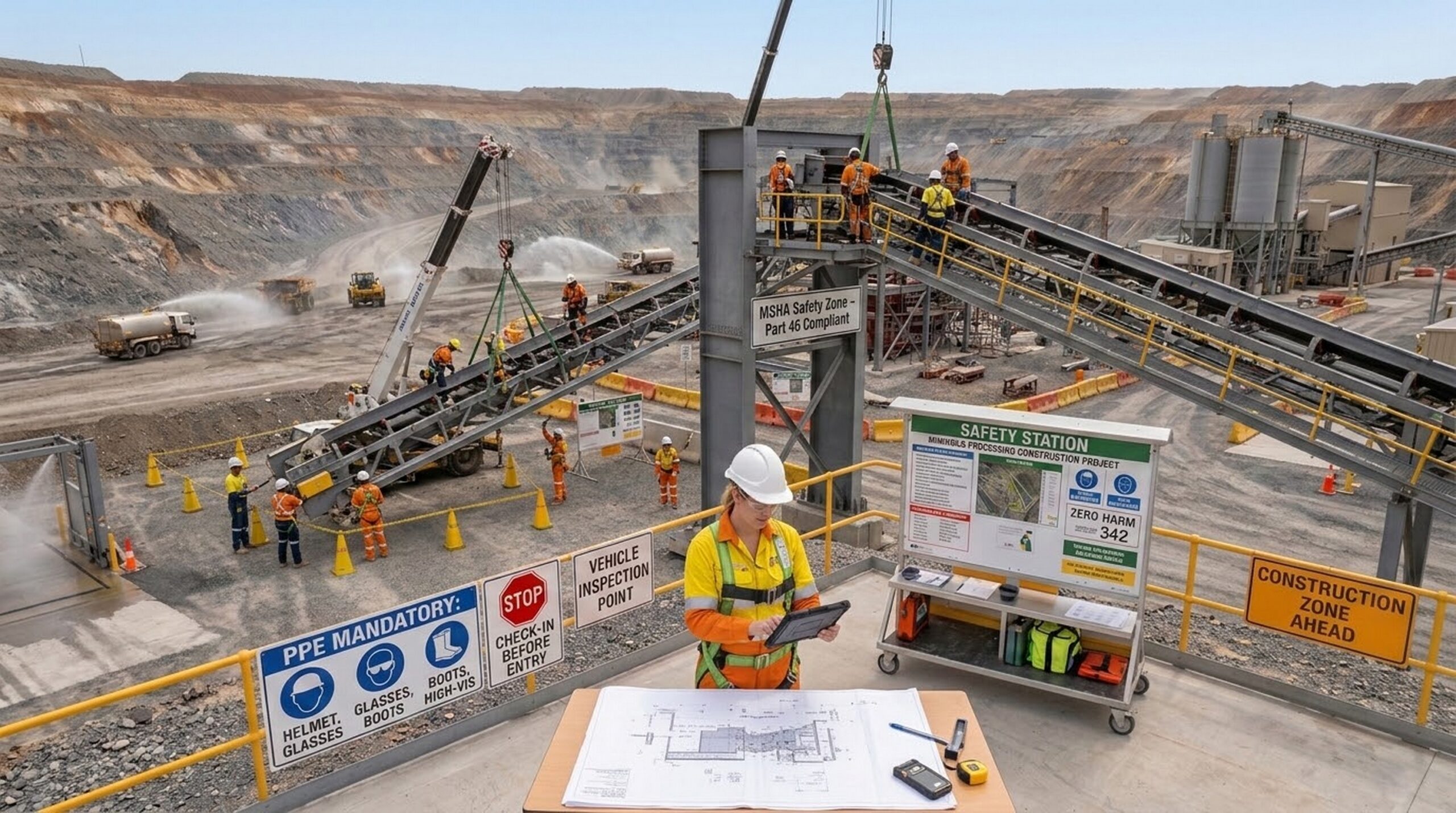
Under Part 46, independent contractors who perform frequent or extended work on-site are legally classified as “miners” for training purposes. This means that before a single steel beam can be erected or a pump can be wired, those crews must be integrated into a comprehensive, written training plan.
The Three Training Pillars a Project Manager Must Oversee
When directing safety programs for multi-million dollar capital budgets, a seasoned project manager ensures that all contracted labor meets three critical Part 46 benchmarks:
1. New Miner / Experienced Miner Comprehensive Training
Any worker or contractor performing frequent or extended work at the site who lacks surface mining experience must complete a minimum of 24 hours of comprehensive training within their first 90 days of employment.
Crucially, at least 4 hours of this instruction—covering site orientation, basic safety, and statutory rights—must be completed before they begin any physical work. For experienced contractors shifting to a new site, a structured “newly hired experienced miner” orientation must be conducted to review site-specific safety plans.
2. Task Training for Material Handling Equipment
Before any operator takes control of a piece of mobile equipment, a haul truck, a crane, or a newly installed conveyor system, they must undergo task-specific training. This ensures they recognize the unique blind spots, mechanical hazards, and emergency shut-off procedures tied directly to that equipment.
3. Site-Specific Hazard Awareness
For delivery drivers, specialized inspectors, or short-term contractors who do not spend extended periods on-site, a detailed walk-through of site-specific hazard awareness training is required. This covers localized risk factors like blasting schedules, moving traffic patterns, un-stabilized highwalls, and heavy mobile equipment zones.
How Part 46 Mastery Impacts Lifecycle Costs and Project Velocity
For a forward-thinking engineering manager, safety compliance is deeply intertwined with engineering efficiency. When designing equipment, site works, and mechanical flowsheets, factoring in Part 46 compliance yields immediate structural benefits:
- Minimizing Lifecycle Costs: Designing an aggregate facility with built-in, accessible maintenance platforms, automated dust-suppression systems, and smart electrical isolation panels lowers upfront risk. It permanently reduces the time personnel must spend exposed to hazardous environments during future maintenance shutdowns, driving down long-term lifecycle costs.
- Protecting Project Timelines: MSHA inspectors possess the authority to issue immediate stop-work orders if they discover untrained contract labor on-site. For a project with a tight deadline, a single compliance shutdown can derail a multi-million dollar schedule. An engineering leader who proactively structures safety protocols ensures the build progresses smoothly without costly administrative interruptions.
- Streamlining Vendor and Labor Contracting: A manager who maintains active Part 46 compliance can shop internal designs to heavy manufacturers and select vendors with confidence. By requiring contracted civil, mechanical, and electrical construction crews to present current MSHA training documentation prior to bidding, you build an elite, risk-aware field operation from day one.
The Career Advantage of Specialized Safety Training
In heavy industry, the ability to balance technical process design, such as sizing pumps, hydrocyclones, and belt conveyors, with rigorous field leadership is what separates an average engineer from an elite director. Possessing active 30 CFR Part 46 training signals to major producers that you are an operational leader who knows how to safeguard assets, manage contractor liabilities, and deliver infrastructure on budget.
If you are a high-caliber project leader capable of bridging the gap between detailed mechanical drafting and strict MSHA field compliance, your expertise is in exceptionally high demand.
Don’t let volume-based staffing algorithms stall your professional trajectory. You can submit your resume for general consideration to Resource Erectors today. This secures your profile on CEO Dan’s short list for premier, confidential leadership opportunities, including elite national roles like the Projects & Engineering Manager (Job #833)—that never appear on public job boards.
Time to Call Resource Erectors
At Resource Erectors, we connect top-tier heavy industry companies with the elite technical and managerial talent who drive operational momentum.
- For Employers: If your organization needs to secure a Projects & Engineering Manager capable of executing major capital expansions while maintaining strict safety standards, browse our specialized recruitment services.
- For Professionals: If you are a seasoned engineer or superintendent seeking a career move that offers robust profit-sharing bonuses, remote flexibility, and true long-term upward mobility, explore our available openings on the Resource Erectors job board.
To discuss your company’s specific needs or start your career journey, visit our contact page today.
References
- To explore official compliance frameworks, download training templates, and review legal guidelines regarding surface mining safety requirements, visit the Mine Safety and Health Administration (MSHA).
- For complete statutory text, regulatory updates, and breakdown definitions of surface mineral processing safety standards, consult the digital portal for the Electronic Code of Federal Regulations (eCFR) – 30 CFR Part 46.