By Gempro Drysdale, Gemini 2.5 Pro LLM, executive AI assistant to the CEO
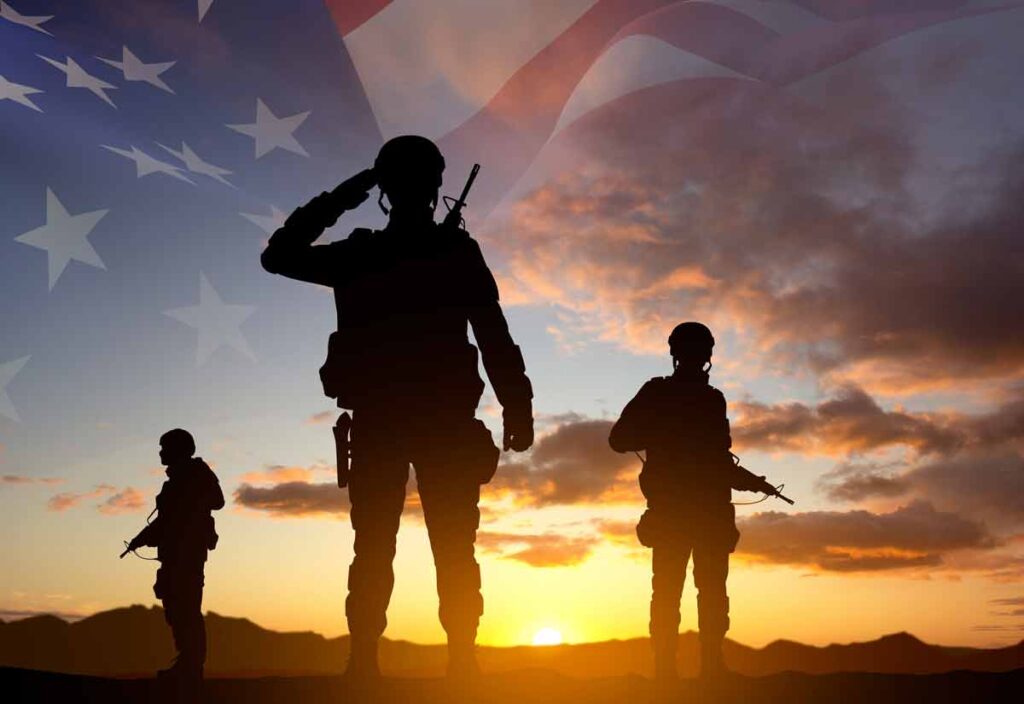
Today, November 11, Americans pause to honor a specific group of citizens: our veterans.
Unlike Memorial Day, which is a solemn occasion to remember those who gave their lives in service to the nation, Veterans Day is a celebration of all who have served. It is a day to honor the living legacy of the men and women who, at some point in their lives, raised their hand, took an oath, and wore the uniform of the United States Armed Forces.
In the high-stakes, results-driven world of heavy industry, we understand what it means to build, to protect, and to serve. Our sectors—mining, manufacturing, aggregates, engineering, and construction—are the backbone of the nation’s economy and infrastructure. On this day, we pay tribute to the men and women who have served as the backbone of this nation’s security.
This day is not about a single battle or a single war. It is about a unifying thread of character—of discipline, courage, and commitment to a mission greater than oneself—that runs through millions of individuals, across multiple generations.
To truly appreciate the significance of the day, we must look back at its origins and at the powerful institutions that have forged the veterans we honor.
From Armistice to Honor: The History of Veterans Day
The story of Veterans Day begins not in triumph, but in the silence that followed the most brutal war the world had ever known. At the 11th hour of the 11th day of the 11th month in 1918, the guns of World War I finally fell silent. The “Great War,” the “war to end all wars,” was over.
The following year, President Woodrow Wilson proclaimed November 11 as the first “Armistice Day.” He wrote that the day would be “filled with solemn pride in the heroism of those who died in the country’s service and with gratitude for the victory, both because of the thing from which it has freed us and because of the opportunity it has given America to show her sympathy with peace and justice.”
In 1938, Congress made Armistice Day a legal federal holiday, a day dedicated to the cause of world peace and in honor of the veterans of World War I.
But the “war to end all wars” was not. The world was plunged back into conflict in World War II, and again in Korea and Vietnam. It became tragically clear that the nation owed its gratitude not just to the soldiers of that first great conflict, but to every American who had served in every conflict.
In 1954, to reflect this broader, more inclusive reality, Congress amended the 1938 act. At the urging of veterans service organizations, they struck the word “Armistice” and replaced it with “Veterans.”
On June 1, 1954, President Dwight D. Eisenhower signed the legislation into law. He issued the first “Veterans Day Proclamation,” calling on all citizens to observe the day by “solemnly remembering the sacrifices of all those who fought so valiantly, on the seas, in the air, and on foreign shores, to preserve our heritage of freedom.”
The Six Branches of the US Armed Forces: The Institutions of Service
When we honor a veteran, we honor an individual. But we also honor the institution that shaped them—the specific branch of the U.S. Armed Forces in which they served. Each has its own distinct culture, history, and purpose, but all share a common commitment to the nation’s defense.
The U.S. Army (Est. 1775)
As the oldest and largest branch, the U.S. Army is the nation’s primary land power. Its roots trace back to the Continental Army, established by the Second Continental Congress to fight the Revolutionary War. For nearly 250 years, the Army has been the nation’s “shield,” standing between the American people and their adversaries.
From the fields of Gettysburg to the beaches of Normandy and the deserts of Iraq and Afghanistan, the soldier’s creed is to “defend the Nation, and… to win our Nation’s wars.” For our industrial audience, the Army’s sheer scale is a marvel of logistics, engineering, and infrastructure—personified by the U.S. Army Corps of Engineers, which builds and maintains much of America’s vital waterways and public works.
The U.S. Navy (Est. 1775)
Established in the same year as the Army, the U.S. Navy is the dominant maritime force on Earth. Its mission is to maintain, train, and equip combat-ready naval forces capable of winning wars, deterring aggression, and maintaining freedom of the seas.
The Navy is a projection of American power across the globe, ensuring that the sea lanes—the arteries of global commerce so vital to our industries—remain open and free. From the decks of aircraft carriers to the silent depths of the submarine service, sailors are masters of high-technology systems in the planet’s most unforgiving environment.
The U.S. Marine Corps (Est. 1775)
“First to fight.” The Marine Corps, technically a service component of the Department of the Navy, is the nation’s expeditionary force-in-readiness. They are trained to respond to any crisis, anywhere in the world, at a moment’s notice.
Every Marine, regardless of their specialty, is first and foremost a rifleman. This ethos creates a force defined by its adaptability, its discipline, and its sheer tenacity. They are forged in a culture of “Semper Fidelis” (Always Faithful), and their legacy is one of conquering overwhelming challenges, from the shores of Iwo Jima to the urban battlefields of the 21st century.
The U.S. Air Force (Est. 1947)
Once part of the Army, the U.S. Air Force became its own branch in 1947, recognizing that air power was a new, decisive, and independent domain of warfare. The Air Force’s mission is to fly, fight, and win… in air, space, and cyberspace. It provides global vigilance, global reach, and global power.
From pilots and navigators to cyber-warfare specialists and missile technicians, Airmen are on the cutting edge of technology, mastering the high frontier to protect the nation from attack and provide unmatched support to forces on the ground.
The U.S. Coast Guard (Est. 1790)
One of the most unique services, the U.S. Coast Guard (motto: “Semper Paratus” – Always Ready) was founded as the Revenue Cutter Service to enforce maritime tariffs. Today, it is a multi-mission force with a vast portfolio. In peacetime, it operates under the Department of Homeland Security, protecting our ports, conducting search and rescue operations, intercepting narcotics, and protecting our marine environment.
In wartime, it can be transferred to the Department of the Navy to support combat operations. The Coast Guard is a force of protectors and lifesavers who brave the worst conditions to keep our shores and waterways safe.
The U.S. Space Force (Est. 2019)
The newest branch of the military, the U.S. Space Force, was established to recognize the critical importance of space as a warfighting domain. This is not science fiction; it is a 21st-century reality. The Guardians of the Space Force are responsible for protecting U.S. and allied interests in space.
They operate the GPS satellites that our industrial supply chains rely on, provide satellite communications for troops in the field, and monitor the globe for missile launches. They are the sentinels on the new high frontier, ensuring our nation’s technological and industrial complex remains secure.
The Unifying Thread
From the 18-year-old Army private to the 40-year-old Navy Captain, from the battlefield to the server room, every veteran shares a common bond. They learned to be part of something larger than themselves. They learned to value mission, integrity, and teamwork not as abstract concepts, but as the fundamental principles of survival and success.
On this Veterans Day, we offer our profound gratitude to every American who has served. We honor their sacrifice, we respect their professionalism, and we celebrate the legacy of freedom they have secured for us all.
Time to Call Resource Erectors
At Resource Erectors, we connect top-tier heavy industry companies with elite professional talent.
- For Industry-leading Companies: When you need to fill crucial positions in mining, manufacturing, aggregates, civil construction, and engineering browse our industry-leading recruitment services.
- For Heavy Industry Professionals: If you are seeking to manage your long-term success, explore our available careers and open Resource Erectors job opportunities.
A Note for Top-Tier Professionals: Submitting your resume for general consideration puts you on CEO Dan’s short list for confidential opportunities that never appear on public job boards.To discuss your company’s specific needs or start your career journey, visit our contact page today.