By the Resource Erectors Team
The physical infrastructure supporting the modern digital economy is expanding at an unprecedented rate. While public attention remains fixed on high-tech microchips and complex software algorithms, the reality of this technological expansion is grounded in a much more traditional sector: concrete and aggregates.
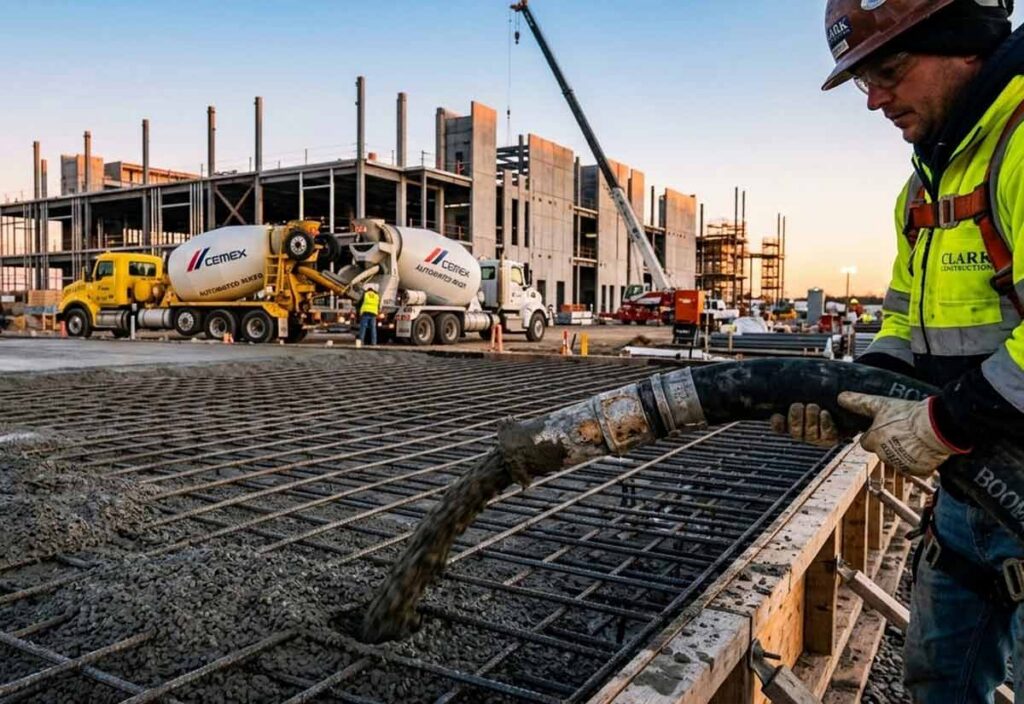
Every massive data center, hyperscale server warehouse, and localized energy asset requires thousands of tons of high-strength concrete to secure its foundations. In 2026, this ancient material is meeting cutting-edge technology as artificial intelligence transforms the way concrete is formulated, mixed, and poured on American soil.
According to recent industrial infrastructure reports, including technical briefs on AI for American-produced cement and concrete, hyperscale technology organizations are actively partnering with domestic material producers to optimize concrete formulations using machine learning.
This initiative is driven by the immediate need to accelerate construction timelines for data center facilities while maximizing the structural integrity and resource efficiency of the materials used. By applying AI to the concrete design process, engineers are uncovering ways to manipulate aggregate combinations and chemical recipes with a level of precision that was previously impossible.
The Material Demands of the Infrastructure Surge
The scale of the current infrastructure surge is immense. Hyperscale facilities require specialized foundation designs to support heavy server racks, complex liquid cooling networks, and massive backup power systems.
The unprecedented load requirement is a key feature of the AI data center engineering solutions currently reshaping the construction landscape. Traditional concrete mix development relies on decades of empirical testing and historical recipes, which can take weeks to adjust and validate.
By contrast, AI models can analyze thousands of material variables simultaneously, predicting the exact compressive strength and curing behavior of a batch before it leaves the mixing plant.
Concrete is not a static material. It is a complex mixture of cement, water, fine aggregates, coarse aggregates, and chemical admixtures. The exact proportions of these ingredients dictate how the concrete will behave during transportation, placement, and its multi-decade lifespan.
When data center developers demand structures that can be built faster and last longer, traditional hit-and-miss testing methods become an expensive operational bottleneck. AI eliminates this delay by digitally simulating how a specific mix will perform under real-world pressures.
AI for Mix Optimization and Aggregate Packing
The core challenge in concrete engineering is balancing multiple competing variables. Operators must manage structural strength, workability, cost, and curing speed. The introduction of machine learning algorithms allows producers to input local aggregate characteristics, cement chemistry, and ambient environmental conditions to receive an optimized mix design instantly.
For instance, the AI can determine the precise distribution of fine and coarse aggregates required to achieve optimal aggregate packing. This process involves filling the voids between larger stones with smaller gravel and sand particles, minimizing the space that must be occupied by expensive cement paste.
Algorithmic precision slashes material costs and enables domestic producers to optimize their localized supply chains. By reducing the reliance on excess cement, the industry can create higher-performing structures with less material waste.
Curing Acceleration and Energy Considerations
Time is a critical metric in heavy civil construction. Waiting for concrete to cure and reach its design strength can create major bottlenecks in project schedules. Using predictive AI models, engineers can design concrete mixes that achieve rapid early strength without compromising long-term durability. This capability is essential for data center construction, where structures must be erected quickly to keep pace with technological demand.
The immense energy required to manufacture traditional cement kilns links directly to the broader energy pivot and fossil fuel resurgence of 2026, making efficiency in the aggregate sector an economic necessity.
As energy costs remain a top consideration for heavy manufacturing, using artificial intelligence to optimize aggregate packing and reduce kiln burn times provides a significant financial advantage. Efficient material design translates directly to lower operational expenses across the entire supply chain.
Byproduct Utilization and Material Security
Another major aspect of AI-optimized concrete is the integration of alternative materials and industrial byproducts, such as slag, fly ash, and recycled aggregates. Machine learning models excel at predicting how these highly variable materials will perform when substituted into standard mixes. This capability allows producers to safely increase the use of recycled inputs while maintaining strict performance guarantees.
Additionally, this formulation technology is paving the way for integrating advanced carbon capture technologies into the cement manufacturing process, transforming potential industrial waste streams into high-strength operational assets that meet structural specifications.
Reshoring the production and engineering of these essential construction materials is a priority for securing domestic infrastructure. The concrete and aggregate industry cannot afford to rely on foreign innovations or imported chemical admixtures to maintain its operational momentum.
Just as the mining sector is focusing on supply chain security through initiatives like the Tungsten Trench and domestic mineral autonomy, the American concrete sector is leveraging AI to maximize the utility of purely localized resources.
Whether utilizing regional sand quarries or domestic limestone deposits, artificial intelligence ensures that American-produced materials outperform global alternatives.
The Evolution of the Aggregate Workforce
This digital evolution is redefining the skill sets required within the concrete and aggregates sector. The modern concrete plant manager, quality control technician, and mix design engineer must look beyond traditional mechanical processes.
The industry is experiencing urgent demand for professionals who can interpret data models, manage automated batching systems, and collaborate with data scientists to refine proprietary machine-learning formulas.
As heavy industry becomes more tech-centric, the human element remains the deciding factor in successful implementation. Companies that successfully recruit and retain technically proficient aggregate specialists are outpacing competitors in both project velocity and material quality. The engineering workforce must adapt to an environment in which data analysis is as important as structural geology.
Conclusion: Digital Intelligence in Heavy Industry
The integration of artificial intelligence into American cement and concrete production is a prime example of traditional grit meeting modern intelligence. By transforming concrete from a standard commodity into a digitally optimized technology asset, the industry is ensuring that the physical foundation of the digital age is strong, efficient, and entirely domestic.
As the demands of the infrastructure boom continue to escalate, the alliance between machine learning and aggregate engineering will remain the cornerstone of heavy civil construction.
Submit Your Resume for Confidential Consideration
The technological transformation of the concrete and aggregates sector means that the most critical engineering, operational, and management roles are filled through highly selective, unadvertised channels. Submitting your resume for general consideration ensures that your qualifications are immediately accessible for exclusive Resource Erectors’ confidential hiring opportunities.
This proactive availability is essential for industry professionals who want to position themselves at the leading edge of AI-driven manufacturing and heavy civil construction without compromising their professional privacy.
We serve as a discreet bridge to forward-thinking organizations that value technical expertise and leadership grit. Register your credentials today to ensure you are the first candidate considered when premium, unadvertised opportunities arise in your field.
Time to Call Resource Erectors
At Resource Erectors, we connect top-tier companies with elite talent in the concrete, aggregates, mining, and civil construction sectors. The shift toward AI-optimized materials and rapid infrastructure deployment requires a new class of industrial leadership.
- If you need to fill crucial positions in advanced concrete engineering, plant management, or aggregate quality control, browse our industry-leading recruitment services.
- If you are a professional seeking to manage your long-term success in the evolving heavy materials sector, explore our available careers and open Resource Erectors job opportunities.
- To discuss your company’s specific needs or start your career journey in this high-tech industrial landscape, visit our contact page today.