By the Resource Erectors Research Team
The heavy construction materials and aggregate sectors are facing an intense, structural engineering challenge. Producers must simultaneously reduce the massive energy intensity of traditional thermal manufacturing while drastically curbing carbon emissions. Historically, the center of this challenge sits directly inside the rotary kiln—the high-temperature heart of cement clinker production.
Traditionally, achieving the temperatures required for calcination (converting limestone into lime) has depended entirely on burning carbon-heavy fossil fuels. However, as we cross the midpoint of 2026, a fundamental shift in processing technology is moving from the lab to commercial-scale industrial execution: electrified cement production.
By swapping open combustion for specialized plasma or electric clinker reactors, advanced producers are demonstrating that the thermal calcination loop can be decoupled from fossil fuels entirely. When this process is coupled with downstream mineral carbonation technology, the cement production line transforms from a primary source of carbon emissions into an active, structural carbon sink.
1. The Thermodynamics of the Electric Clinker Reactor
To understand how industrial electrification is restructuring production, it is helpful to look at the raw physics of traditional clinker manufacturing.
In a standard rotary kiln, crushed limestone (calcium carbonate) must be heated to approximately 1,400 to 1,500 degrees Celsius. This intense thermal threshold triggers an endothermic reaction, breaking down the limestone into calcium oxide (clinker) and carbon dioxide gas.
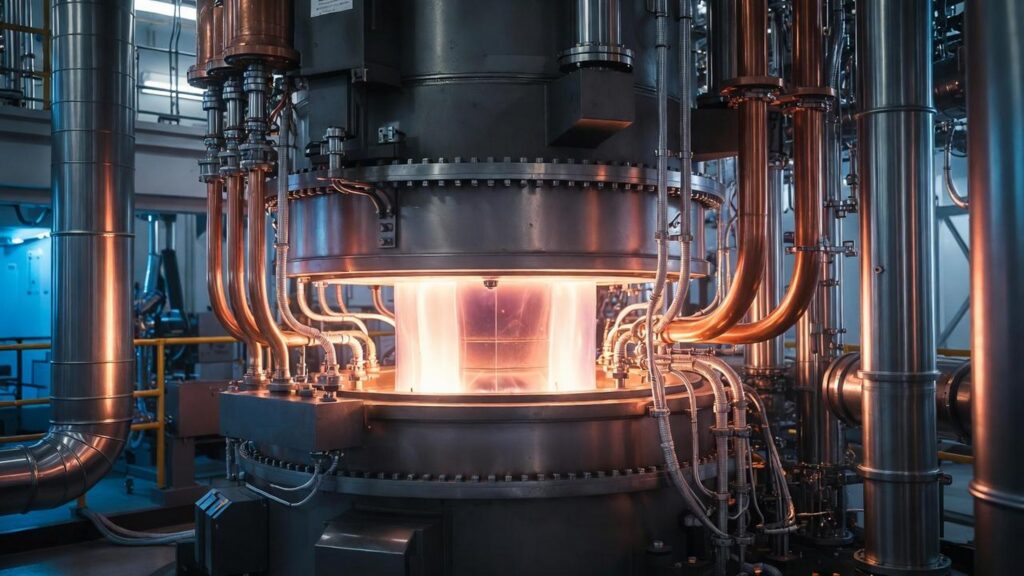
In traditional setups, this reaction generates a massive, combined stream of combustion exhaust and process emissions that is exceptionally difficult and expensive to separate for carbon capture systems. Conversely, an electric clinker reactor approaches the thermal calcination loop through a completely closed, combustion-free thermodynamic process:
| Operational Parameter | Traditional Fossil-Fueled Kiln | Next-Gen Electric Clinker Reactor |
| Primary Thermal Source | Open combustion of coal, petcoke, or gas | Direct electric arc or plasma reactor heating |
| Flue Gas Stream Composition | Mixed combustion air, nitrogen, and process CO₂ | Concentrated, pure process CO₂ stream |
| Thermal Efficiency Zone | Highly vulnerable to atmospheric exhaust loss | High-density containment within closed reactor |
| Downstream SCM Integration | Traditional slag/fly ash blending | Carbon-negative mineralized SCM additions |
Because there is zero combustion air injected into an electric reactor, the process eliminates the massive volume of nitrogen and oxygen exhaust that typically dilutes traditional kiln emissions. Consequently, the reactor output is a highly concentrated, pure stream of process carbon dioxide. This pure gas output completely eliminates the need for energy-intensive chemical amine scrubbing systems, allowing for immediate downstream utilization or sequestration.
2. Closing the Loop: Mineralization and Carbon-Negative SCMs
Electrifying the thermal kiln solves the energy input side of the equation, but it does not stop the chemical process emissions inherent in converting limestone to lime. To handle this remaining carbon stream, next-generation industrial sites are pairing electric reactors directly with advanced mineralization technology.
Instead of compressing and piping the captured carbon dioxide into underground storage wells, the gas is routed into mineral carbonation chambers. In these chambers, the pure CO₂ is reacted with magnesium- or calcium-rich silicate minerals (such as olivine or recycling byproducts).
This reaction permanently converts the gaseous carbon dioxide into solid, stable carbonate minerals. Furthermore, this mineralized byproduct is not a waste material. It is a high-performance Supplementary Cementitious Material (SCM) that can be blended back directly into the final concrete mix. This process offsets traditional clinker requirements while permanently trapping the carbon in a solid, structural state for centuries.
3. Integrating Electrification Into Existing Plant Footprints
For operational leaders and aggregate executives, the most vital aspect of this technology is its compatibility with current manufacturing assets. The electric reactor modules are being engineered not just for greenfield facilities, but as direct plug-and-play retrofits for existing preheater and precalciner systems.
By installing an electric reactor upstream of a traditional rotary section, producers can handle the bulk of the raw calcination work using renewable grid power. This hybrid configuration allows existing industrial facilities to drastically scale down their thermal fuel consumption while protecting their legacy equipment investments.
Conclusion: The Fleet and Factory of Tomorrow
The electrification of cement production is no longer a speculative concept. It represents the structural reality of Industry 5.0—where high-voltage electrical engineering, advanced thermodynamics, and circular mineral science converge to secure the long-term viability of the construction materials sector.
Producers who master these electric thermal loops early will secure a massive competitive advantage as material specifications tighten across regional infrastructure backlogs.
Build Your Future with Resource Erectors
At Resource Erectors, we have spent decades partnering with the premier organizations and top-tier manufacturing and technical professionals driving America’s heavy industrial sectors. Whether you specialize in mining, aggregates, concrete production, heavy manufacturing, or industrial engineering, we connect world-class talent with forward-thinking employers who are shaping the industry.
- Looking for your next career breakthrough? Explore our comprehensive, up-to-date Job Board to find your next professional destination.
- Ready to make your next move? You can quickly Submit Your Resume for General Consideration to connect directly with our specialized recruiting team.
- Ready to solve your workforce challenges? Discover how our customized recruitment strategies help you secure elite engineering and operational professionals by learning more About Resource Erectors today.
References
Jones, M. K. (2022). Innovators and the development of mini-mills for steel recycling: Lessons for the development of a circular economy from the steel industry. Colorado School of Mines. https://www.mines.edu/global-energy-future/wp-content/uploads/sites/361/2022/10/Payne-Institute-Commentary-Lessons.pdf
Prime Creative Media. (2026). Can electrified cement reshape the industry’s future? Aggregates Business Europe. https://www.aggbusiness.com/can-electrified-cement-reshape-the-industrys-future-holcim-saltx-and-paebbl-think-so/