By the Resource Erectors Research Team
American nuclear energy is experiencing an unprecedented structural resurgence, driven by an insatiable global thirst for continuous, carbon-free baseload electricity.
Between the massive computational power demands of artificial intelligence data centers, the ongoing expansion of domestic heavy manufacturing, and commercial commitments to Small Modular Reactors, utility planners are confronting a reality they have not faced in four decades: baseload grid reliability requires nuclear fuel.
For years, Western utilities relied on complacent, secondary supplies and volatile overseas imports to fuel their reactor fleets. Today, that geopolitical vulnerability has forced a decisive domestic response.
The physical proof of this turnaround arrived in Wyoming’s historic extraction heartland. In a milestone operational achievement, Ur-Energy announced its first commercial shipment of uranium from the Shirley Basin Project.
That inaugural shipment and the formal commercial ramp-up commenced last August, marking the project’s rapid transition from construction decision to full-scale operations in just two and a half years.
With initial recovery starting in the spring and regulatory authorization secured from the Wyoming Department of Environmental Quality, August’s first dispatch of uranium-loaded material to the Lost Creek hub officially transitioned Ur-Energy into a multi-asset domestic producer.
With Shirley Basin now actively ramping up alongside Lost Creek, Wyoming has reasserted its status as the operational engine of the American nuclear fuel cycle.
Yet producing yellowcake at commercial scale involves sophisticated hydrologic chemistry and rigorous process metallurgy. The modern uranium sector is built on advanced chemical engineering, rigorous environmental science, and an intensifying race for specialized extraction leadership.
The Science of In Situ Recovery (ISR): Mining Without Moving Mountains
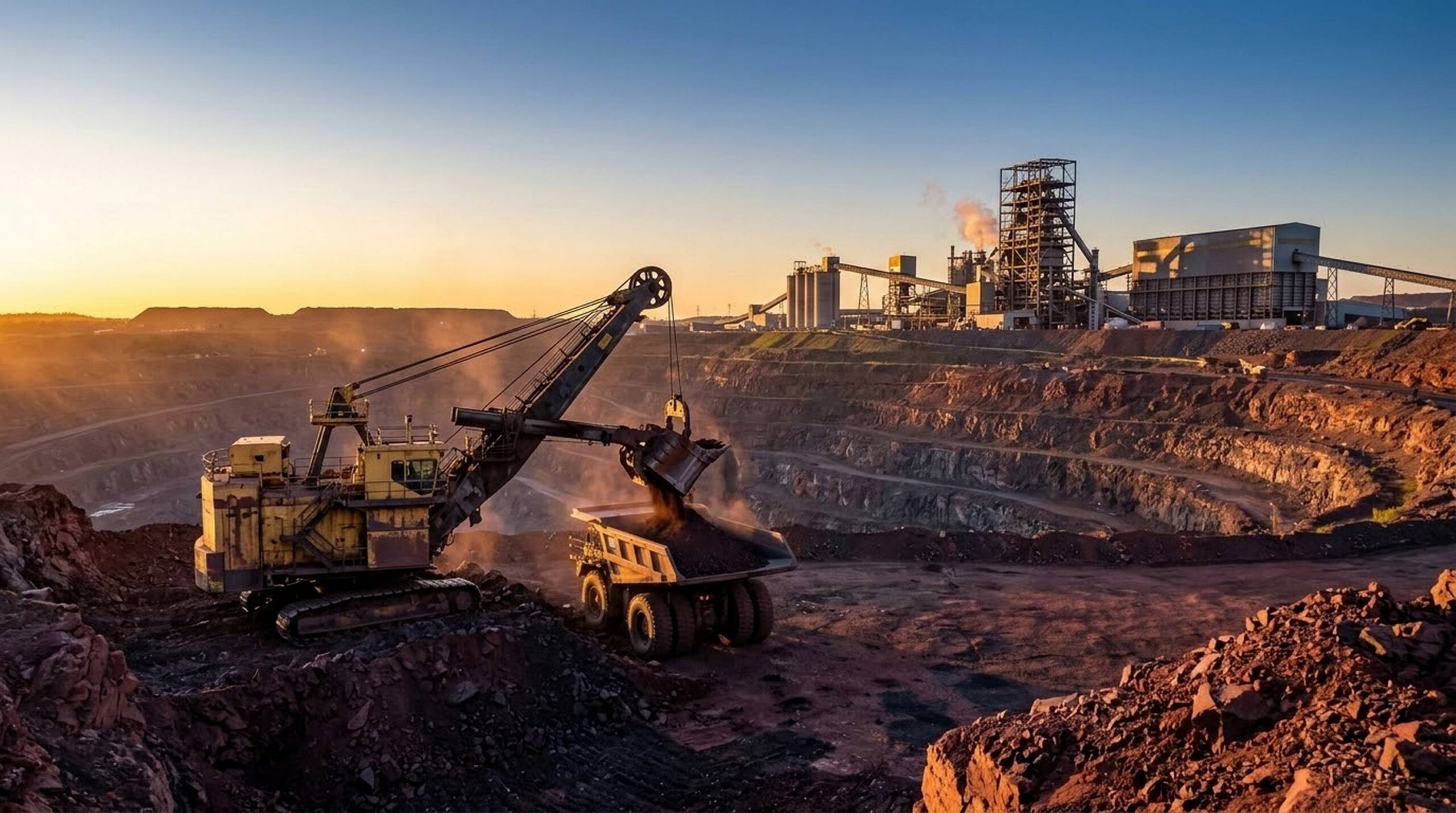
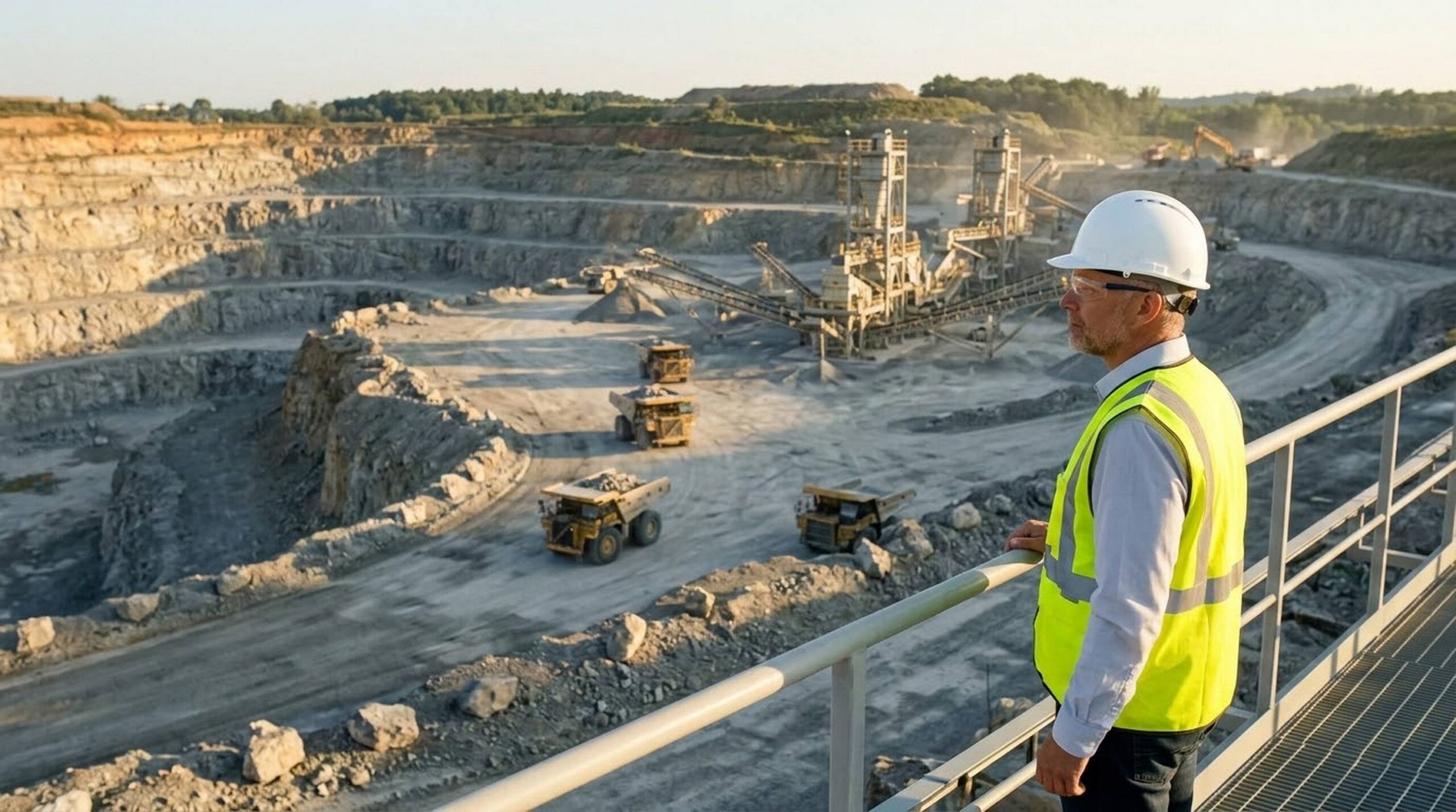
To those familiar with traditional open-pit granite quarries or deep underground coal mines, an In Situ Recovery (ISR) site is an engineering marvel. There are no 400-ton haul trucks, no open highwalls, and no massive tailings impoundments.
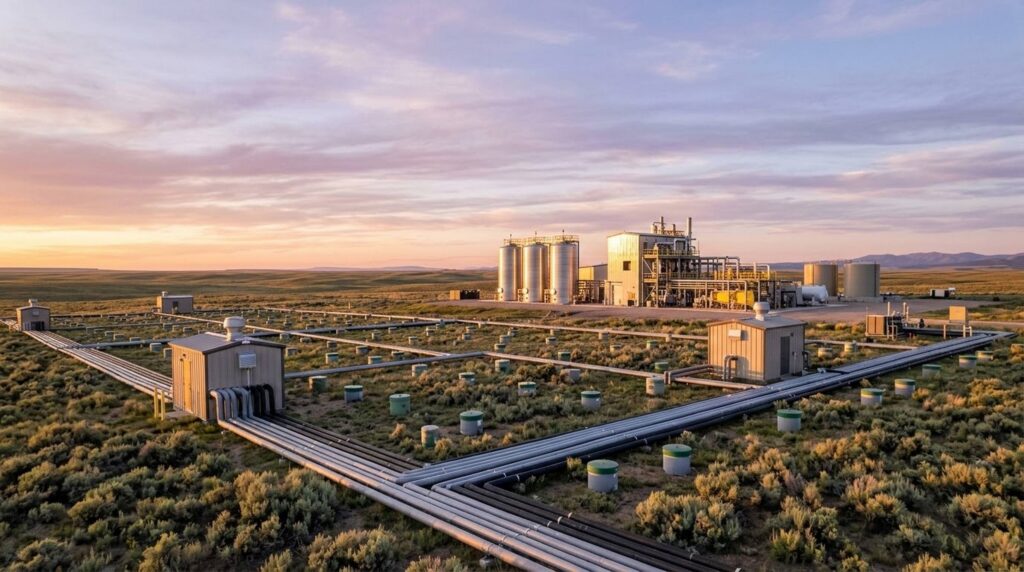
Instead, ISR extracts uranium directly from subsurface sandstone aquifers through a closed-loop hydrologic circuit.
Here is how modern ISR operations turn deep roll-front ore bodies into commercial yellowcake:
The Roll-Front Deposit and Wellfield Patterns
Uranium in basins like Wyoming’s Shirley Basin and Great Divide Basin typically occurs in crescent-shaped “roll-front” formations. Millions of years ago, oxidizing groundwater transported soluble uranium through permeable sandstone until it encountered a reducing geochemical environment, causing the uranium minerals to precipitate onto sand grains.
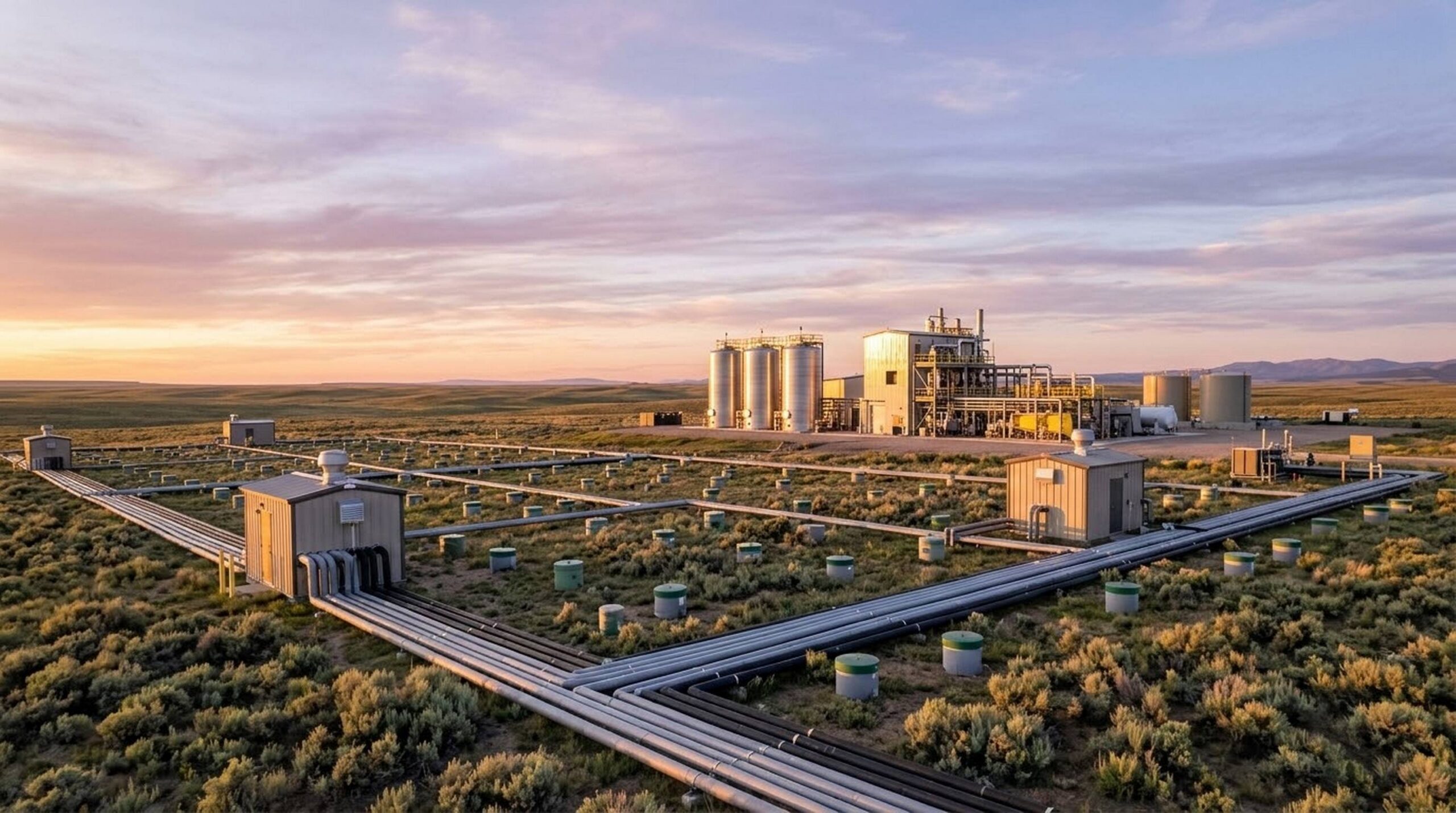
Mining engineers access this deposit using a geometric pattern of wells, typically a five-spot or seven-spot layout. Injection wells surround a central recovery well, all cased and pressure-grouted into the mineralized sand horizon.
Geochemical Leaching (Lixiviant Injection)
Rather than digging up the rock, ISR operations circulate a native groundwater solution fortified with dissolved oxygen and sodium bicarbonate (baking soda).
Operators pump this “lixiviant” down injection wells into the aquifer. Dissolved oxygen oxidizes uranium from its insoluble tetravalent state [U(IV)] to a soluble hexavalent state [U(VI)]. The bicarbonate then complexes with the oxidized uranium, forming highly soluble uranyl carbonate anions.
Extraction and Ion-Exchange (IX) Recovery
Submersible pumps in the central extraction wells pump the uranium-rich pregnant lixiviant back to the surface.
From the wellhead, header houses and insulated pipelines route the solution into the processing plant, where it passes through pressurized ion-exchange (IX) vessels packed with specialized synthetic resin beads. As the liquid flows through the columns, the resin selectively strips the uranyl carbonate complexes from the solution.
The barren liquid is then re-fortified with oxygen and carbon dioxide and reinjected into the wellfield, maintaining a continuous, closed-loop extraction cycle.
Elution, Precipitation, and Drying
Once the resin beads are fully loaded with uranium, the resin undergoes elution, a chemical washing cycle using a concentrated brine solution that strips the uranium off the beads.
The resulting concentrated eluate is treated with hydrogen peroxide or ammonia, which causes the uranium to precipitate out of the liquid as a solid slurry.
This slurry is washed, filtered, and dried in vacuum dryers at temperatures that drive off remaining moisture without releasing dust. The final product is a dense, olive-green to yellow powder: high-purity yellowcake (U3O8), packed into sealed 55-gallon steel drums for secure highway transport.
Environmental Integrity: Hydrology as the Primary Defense
Because ISR takes place directly within water-bearing sandstone formations, hydrologic control is the single most critical operational discipline on the site.
To protect regional water quality and satisfy stringent regulations from the Nuclear Regulatory Commission (NRC) and the Wyoming Department of Environmental Quality (WDEQ), operators maintain strict hydrogeologic containment:
- Continuous Aquifer Bleed: Operators pump slightly more water out of the production zone than they reinject (typically a 1% to 3% bleed rate). This creates a continuous cone of depression, ensuring regional groundwater flows inward toward the extraction wells and preventing mining solution from migrating outward.
- Perimeter Ring Monitoring: Surrounding every active wellfield is an extensive ring of monitor wells completed in the ore zone, along with separate monitoring wells drilled into the aquifers directly above and below the confining clay layers. Hydrologists test these wells on a regular schedule to confirm zero lixiviant excursions.
- Progressive Groundwater Restoration: Once a wellfield reaches economic exhaustion, the restoration cycle begins immediately. Operators flush the pore volume with native groundwater and run the solution through reverse osmosis (RO) systems to return the aquifer’s chemical parameters to baseline standards approved by state regulators.
This closed-circuit engineering makes ISR one of the cleanest, lowest-impact commercial extraction methodologies in the heavy industrial world.
The Broader Resource Race: Rebuilding the Critical Mineral Supply Chain
The commissioning of Shirley Basin reflects a broader transformation sweeping the entire extractive materials economy.
Securing the physical supply chain is no longer just a boardroom talking point; it is a matter of critical industrial survival.
Whether it is our analysis of how the Ramaco rare earth mine in Wyoming is unlocking domestic critical minerals or our ongoing coverage of why North American critical minerals require specialized engineering talent, the industrial imperative remains identical: North America must control its raw material security from the ground up.
As uranium joins the ranks of lithium, rare earth elements, copper, and metallurgical coal as an indispensable strategic commodity, the bottleneck to expansion has shifted away from capital investment.
The ultimate bottleneck is human expertise.
The Talent Bottleneck: Finding the Architects of the Uranium Rebound
The multi-decade bear market that preceded the current nuclear renaissance created a severe generational talent deficit across the uranium extraction sector.
Operating an ISR facility requires a rare intersection of hydrologic science, mechanical plant discipline, and chemical process engineering. Today, producers ramping up assets in Wyoming, Texas, and the Southwest face an intense competition for seasoned technical professionals:
- Subsurface Hydrogeologists: Experts who can model dynamic aquifer flow, calibrate wellfield drawdowns, and design precision monitor well networks to maintain perfect hydrologic containment.
- Chemical Process & Metallurgical Engineers: Plant specialists who master ion-exchange kinetics, elution circuit chemistry, precipitation circuits, and industrial drying technologies.
- Radiation Safety Officers (RSOs): Certified regulatory leaders who can manage comprehensive dosimetry programs, oversee environmental air and water sampling, and maintain absolute compliance with NRC and state licensing mandates.
- Wellfield Construction Superintendents: Leaders who can manage large-scale pattern drilling campaigns, directional drilling, casing installations, and HDPE flowline pipeline networks across expansive high-desert acreage.
Producers who secure this specialized engineering and operational leadership today will be the ones that capture historic margins as long-term utility supply contracts reset at multi-year highs.
The Resource Erectors Takeaway
The milestone shipment of drummed yellowcake from Ur-Energy’s Shirley Basin project proves that the revival of domestic uranium is fully underway.
As the world turns to nuclear energy to secure carbon-free baseload power for artificial intelligence, advanced manufacturing, and national grids, In Situ Recovery mining provides an environmentally sound, commercially viable extraction engine.
Yet capital and geology are only part of the equation. Turning deep mineral deposits into energy security safely requires visionary operational leadership. The companies that assemble the finest engineering, hydrologic, and managerial talent will lead the clean-energy transition for decades to come.
Ready to Lead the Critical Mineral Revolution?
Whether your company is expanding In Situ Recovery operations, opening greenfield processing plants, or modernizing heavy extraction facilities, Resource Erectors is your premier recruitment partner across the mining and processing sectors.
- For Mining Employers: Secure proven Mine Managers, Chemical Process Engineers, Hydrologists, and Operations Directors to lead your assets. Explore our specialized client recruitment services.
- For Energy & Mining Professionals: Take command of your executive trajectory in a booming critical minerals market. Browse active nationwide career searches on the Resource Erectors job board.
- Confidential Executive Placement: Many of our premier plant leadership, technical specialist, and executive searches are conducted discreetly under strict non-disclosure agreements. To ensure your credentials are on file for unlisted, high-impact career placements, submit your resume for general consideration.
- Connect Confidentially: Contact CEO Dan Duszynski directly to begin a private consultation by visiting our contact page today.