By the Resource Erectors Research Team
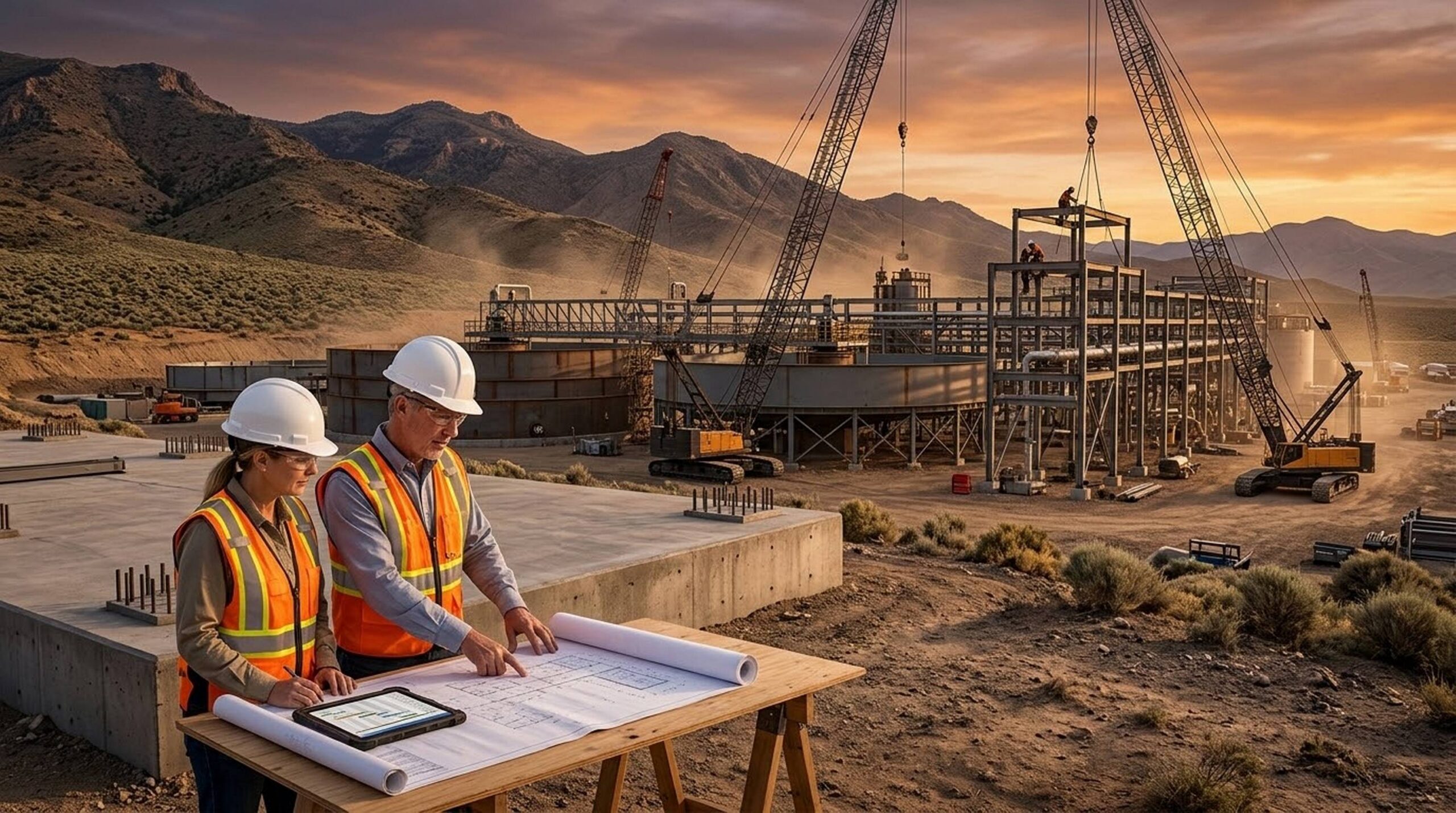
North America is pouring historic volumes of capital into industrial megaprojects. Across the Sun Belt, the Midwest, and the Mid-Atlantic, billions of dollars are flowing into semiconductor mega-fabs, high-density artificial intelligence data centers, advanced battery plants, and federally funded interstate corridor overhauls.
Every square yard of structural concrete, every ton of base course, and every mile of asphalt requires an inescapable physical foundation: construction aggregates. A single major data center campus can consume hundreds of thousands of tons of crushed stone, while a single mile of four-lane highway requires up to 38,000 tons of aggregate.
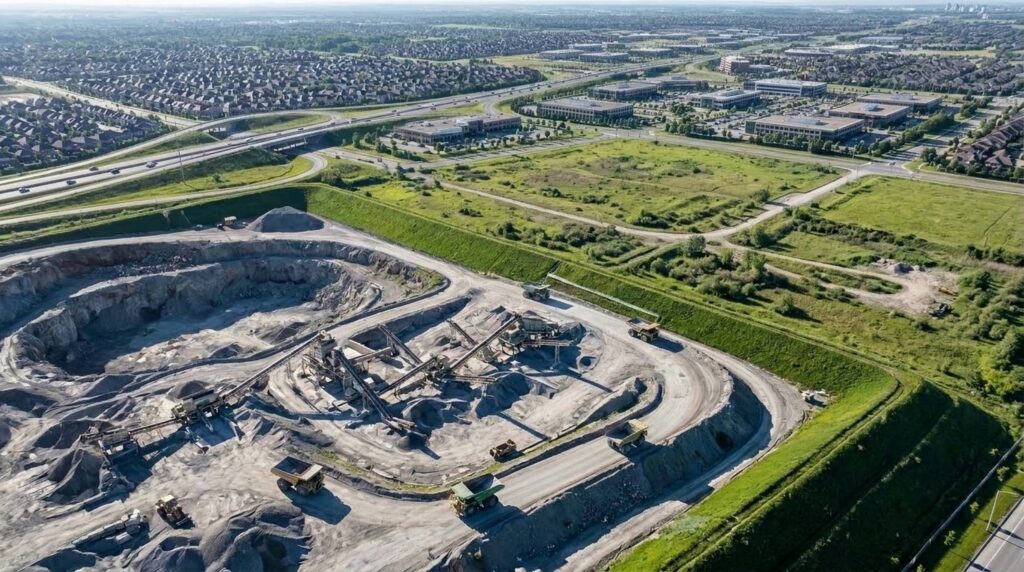
And therein lies the acute industrial paradox of 2026. While demand for crushed stone, construction sand, and gravel surges at metropolitan consumption nodes, the physical quarries and pits supplying those materials are being pushed farther away from urban cores.
As documented in U.S. Geological Survey Mineral Commodity Summaries on Crushed Stone, regional shortages in and near urban centers continue to escalate because of local zoning restrictions, land-development alternatives, and environmental permitting barriers. The resulting aggregate squeeze is rewriting the economics of bulk material logistics, inflating project budgets, and sparking an aggressive nationwide talent hunt for elite operational leaders who can defend and expand urban reserves.
The Tyranny of Distance: Why Haul Economics Dictate Project Margins
Aggregates are low-value, high-mass commodities. Unlike specialty alloys or precious minerals, where transportation represents a negligible percentage of delivered cost, crushed stone and gravel are defined almost entirely by freight economics.
Historically, quarries operated within a tight 20- to 30-mile radius of urban centers. Within this range, tandem and tri-axle dump trucks could cycle multiple deliveries per shift, keeping freight costs predictable and ready-mix batch plants humming.
However, basic haul economics dictate that transportation expenses rapidly outpace mining costs. On average, hauling bulk aggregate just 30 to 50 miles by truck can double the delivered price per ton to the end customer. Every additional road mile adds diesel fuel consumption, fleet tire wear, driver wage hours, and road congestion delays.
When suburban sprawl envelops an active quarry or municipal zoning boards block an existing pit’s expansion, operators are forced to source rock 50, 75, or even 100 miles outside the metropolitan ring. At that distance, delivered material costs skyrocket, truck fleet availability becomes a critical operational bottleneck, and regional infrastructure projects face severe budget overruns before the first cubic yard of concrete is placed.
The Escalating Freight Penalty: Beyond the 50-Mile Radius
The financial impact of geographic displacement compounds across large-scale commercial contracts. When an asphalt paving contractor or concrete supplier bids on a major municipal highway project, trucking rates often dictate whether the bid is competitive or underwater.
As haul distances stretch outward, producers face a dual penalty: higher direct trucking costs and lower fleet utilization. A dump truck that could complete six turns a day on a local quarry loop might only complete two turns when hauling from an outlying county.
To move the same required tonnage, contractors must hire third-party brokered freight at premium spot rates, exposing margins to acute diesel price volatility and driver shortages.
Suburban Encroachment and the Permitting Gridlock
The geographic displacement of aggregate reserves is rarely driven by geology. High-quality limestone, granite, traprock, and natural alluvial gravel deposits often lie beneath expanding suburban perimeters. The barrier is political and legal.
As residential subdivisions and commercial retail developments leapfrog into historically rural and industrial zones, newly arrived suburban residents immediately push back against existing and proposed quarry operations. Noise complaints, perceived ground vibration from blasting, concerns over heavy truck traffic, and dust generation dominate heated town hall zoning hearings.
Local county commissioners and municipal zoning boards, often responsive to vocal suburban constituencies rather than long-term regional infrastructure planners, increasingly deny quarry special-use permits or downzone industrial parcels for mixed-use residential development. In many jurisdictions, housing developments and strip malls permanently pave over high-grade aggregate reserves that could have supplied concrete and asphalt to local roads for half a century.
Securing a greenfield quarry permit or extending an active pit’s lateral boundaries now requires years of contested legal hearings, environmental impact assessments, water table hydrology studies, and complex community negotiations.
The NIMBY Defense: Mitigating Friction Through Modern Plant Engineering
To counter suburban pushback, modern aggregate producers must invest heavily in community mitigation engineering. Forward-thinking operators design operations to be good neighbors long before breaking ground on new benches:
- Engineered Vegetative Berms: Constructing massive earthen perimeter berms lined with mature evergreens to visually shield pit operations and absorb mechanical processing noise.
- Advanced Electronic Blasting: Deploying precision electronic detonators and vibration-monitoring seismographs to control blast wave propagation, keeping ground vibration well below federal limits and municipal perception thresholds.
- Total Dust and Enclosure Systems: Installing fully enclosed screen decks, covered conveyor transfer towers, and high-pressure wet dust suppression systems to eliminate fugitive particulate plumes.
While these engineering upgrades increase capital expenditure, they represent the essential entry ticket to winning municipal permitting approvals in contested suburban corridors.
The Logistics Pivot: Unit Trains, Marine Barges, and Urban Rail Terminals
To overcome suburban zoning barriers and bridge the 50-plus-mile transport gap, major aggregate producers are radically restructuring their supply chain infrastructure. Rather than relying solely on direct truck hauling, the industry is pivoting toward high-volume intermodal distribution:
- Rail-Fed Urban Distribution Yards: Producers are acquiring dedicated rail spurs and constructing high-capacity rail-to-truck transfer terminals directly inside urban industrial corridors. Unit trains hauling 10,000 tons of crushed stone from massive, low-cost rural mega-quarries can bypass highway gridlock and deliver material straight into city distribution centers.
- Marine Barging and Deepwater Terminals: Along major navigable waterways, the Ohio and Mississippi River basins, the Great Lakes, and coastal shipping corridors, barge transit moves the equivalent of 60 to 70 truckloads of stone per barge at a fraction of the carbon footprint and ton-mile freight cost.
- High-Throughput Rail-Unloading Tech: Modern terminal facilities are investing heavily in automated bottom-dump rail car unloaders, high-speed radial stackers, and dust-controlled conveyor transfer points to empty a 100-car train in hours and reload city-bound delivery trucks without creating neighborhood friction.
Building and operating an intermodal logistics network requires heavy upfront capital, but it creates an impenetrable competitive moat for producers that can execute the strategy.
Intermodal Efficiency: Lowering the Carbon Footprint and Highway Burden
Beyond raw economics, intermodal rail and water transport can ease severe municipal congestion. A single 100-car aggregate unit train takes roughly 400 heavy commercial dump trucks off crowded interstate highways.
For metropolitan transportation departments trying to reduce highway pavement wear and manage urban emissions, rail-to-truck urban distribution terminals represent an ideal infrastructure compromise. Producers that can point to reduced carbon intensity per ton-mile gain a distinct advantage when bidding on federally funded infrastructure work governed by low-carbon procurement standards.
The Talent Imperative: The Rise of the Strategic Quarry Leader
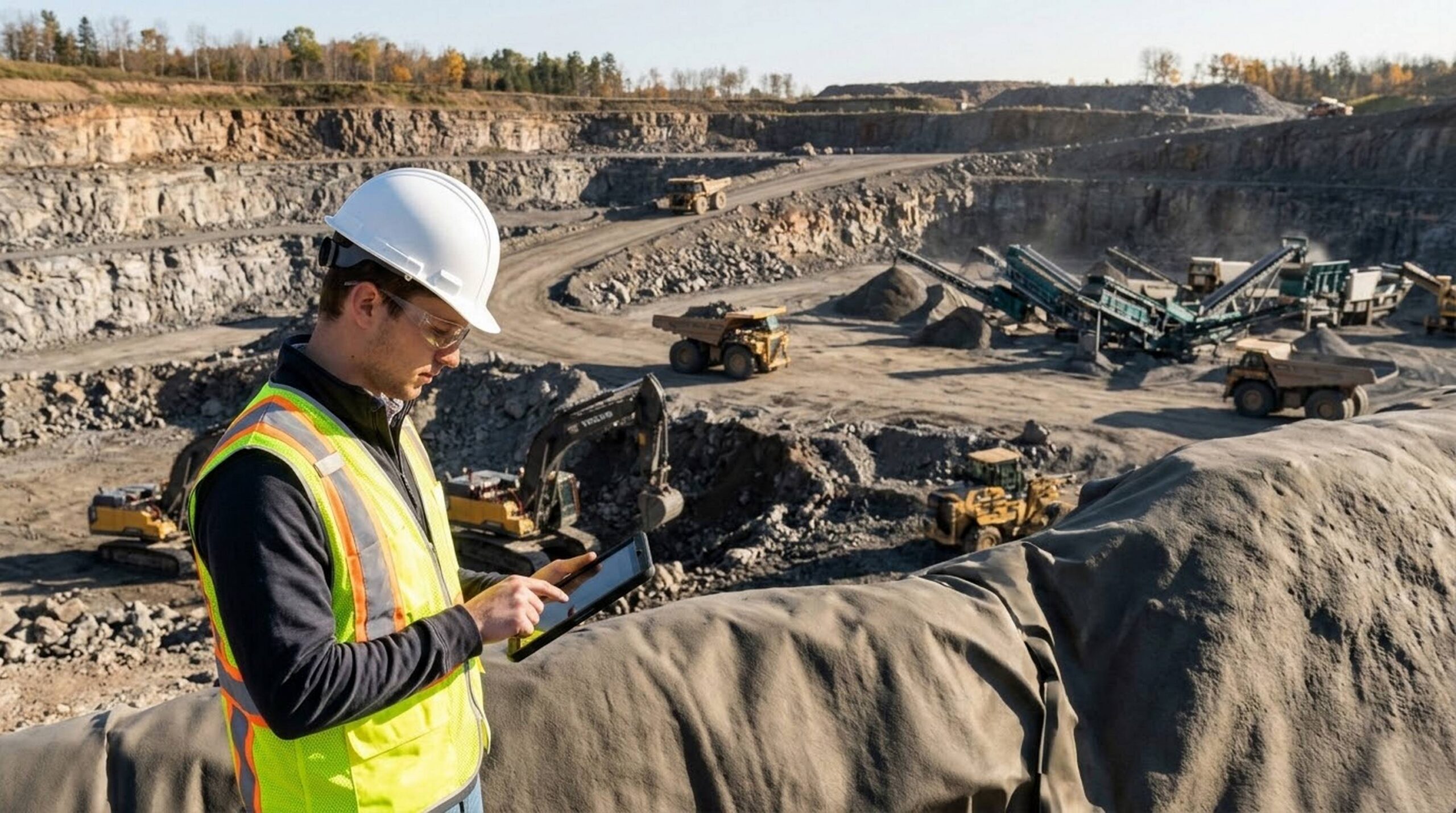
This structural shift in aggregate economics has transformed the profile of executive quarry leadership. Decades ago, running a crushed stone operation was primarily an inside-the-fence exercise in managing heavy machinery: keeping the primary jaw crusher fed, optimizing screen decks, and coordinating haul truck cycles.
In 2026, the modern Quarry General Manager and Land and Permitting Specialist must be strategic, multi-disciplinary executives who can command the pit while mastering external corporate affairs:
- Land and Permitting Directors: Experts who understand MSHA compliance, environmental regulatory frameworks, surface hydrology, and local municipal zoning laws. These professionals lead proactive community outreach, negotiate long-term developer agreements, and navigate zoning boards to secure extraction rights before reserves become landlocked.
- Operations and Logistics General Managers: Leaders capable of optimizing complex multi-tier supply networks. They understand how to balance crushing circuits at the rural production plant with inventory turns, demurrage schedules, and rail dispatch at urban distribution yards.
- Continuous Improvement Champions: Superintendents trained in Lean and Six Sigma who apply statistical process control to comminution circuits, reduce crushing energy consumption, and eliminate equipment downtime to maintain low mining cost baselines that offset rising transport costs.
The companies that win the urban aggregate squeeze will not simply be those with the largest contiguous acreage. They will be the producers who secure the strategic executive talent required to permit contentious reserves, operate high-tonnage intermodal logistics, and deliver material where urban demand is strongest.
Executive Retention: Combating the High Cost of Leadership Vacancies
Because elite quarry managers and permitting directors must combine deep geological insight, mechanical savvy, and political diplomacy, they are exceptionally rare in the heavy-building-materials job market.
When a premier producer loses a Quarry General Manager or Permitting Specialist, the resulting vacancy cost compounds rapidly. Stalled permitting, delayed capital improvement projects, and soon, processing circuits lose operational balance. Finding and retaining strategic operational leadership is no longer just an HR routine; it is the cornerstone of corporate risk management and enterprise valuation across the construction materials sector.
Time to Call Resource Erectors
The battle for urban aggregate reserves and logistics dominance is decided by the quality of your operational leadership. Leaving critical executive, quarry management, or permitting seats vacant stalls strategic expansion, risks permitting deadlines, and burns through operating margins in a high-stakes, fast-moving market.
Resource Erectors connects North America’s premier producers across aggregates, concrete, industrial minerals, mining, and heavy civil construction with the top 10% of engineering, management, and operational talent.
- Partner with our specialized recruiters to build an exceptional operational roster through our comprehensive client recruitment services.
- Discover high-compensation quarry management, operations, and logistics opportunities across North America on the official Resource Erectors job board.
- Advance your career confidentially and position yourself on CEO Dan Duszynski’s executive short list for premier positions that never hit public boards when you submit your resume for general consideration.
- Ready to solve your company’s most demanding operational talent challenges? Reach out directly through our contact page today.