By the Resource Erectors Research Team
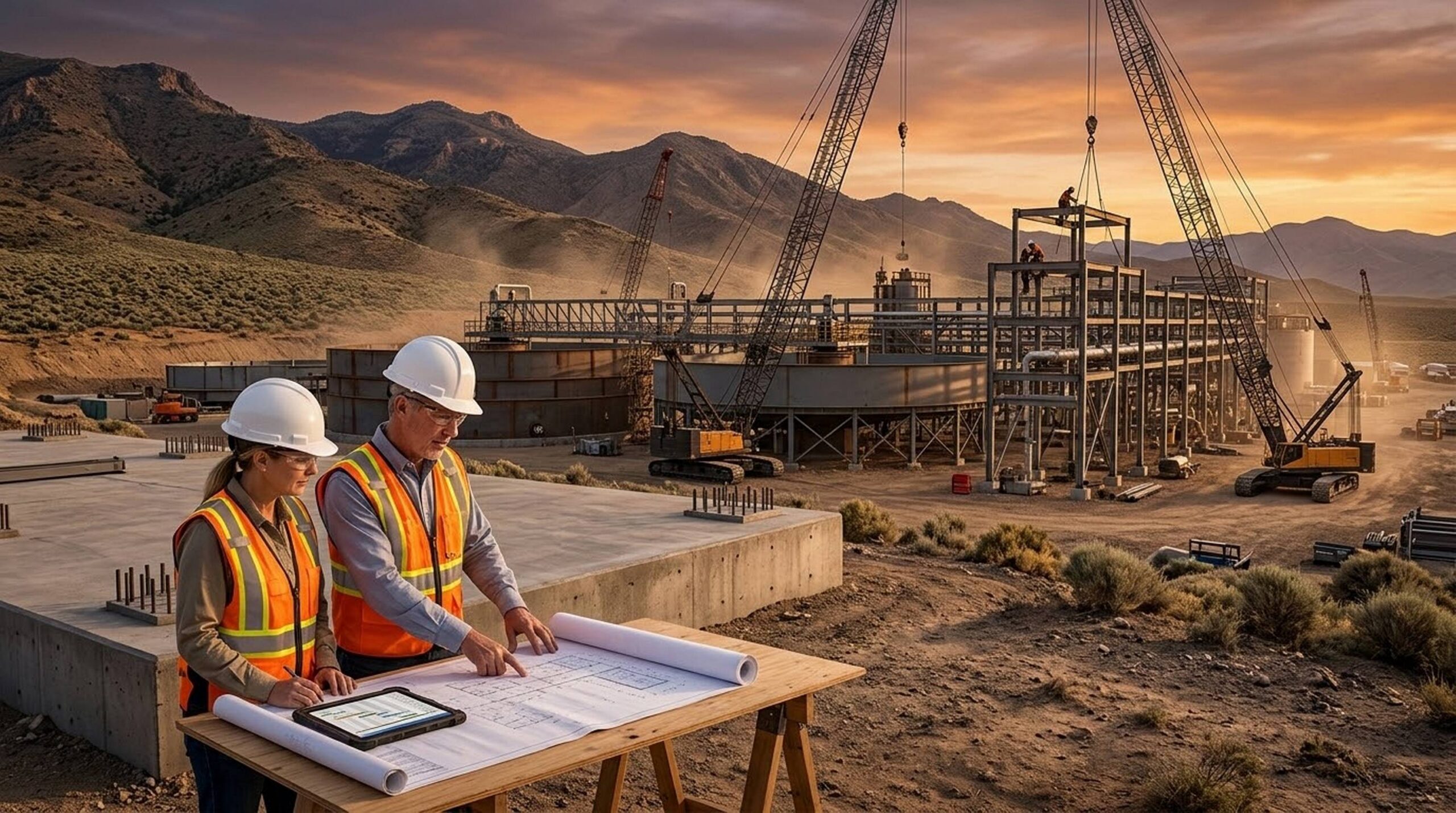
Financial analysts across the mining and heavy construction sectors got a sobering wake-up call on November 11, 2026. Lithium Americas officially raised the Phase 1 capital cost estimate for its flagship Thacker Pass lithium project in northern Nevada by 31 percent, pushing the price tag from $2.93 billion to $3.83 billion.
That single revision added $895 million in direct capital expenditures and lifted total funding requirements by nearly $1 billion. While industry headlines focused on the eye-watering sticker shock, experienced industrial operators looked straight at the root causes behind the numbers.
Equipment availability and ore geology did not derail the budget. The primary culprit was an acute, market-wide squeeze for skilled construction trades, specialized installation crews, and veteran heavy industrial leadership.
Anatomy of a 31 Percent Capex Surge
Designed to produce 40,000 tons per year of battery-grade lithium carbonate, Thacker Pass represents America’s largest fully integrated domestic lithium source. Backed by General Motors and a U.S. Department of Energy loan, the project is racing toward peak construction activity at the end of 2026, with mechanical completion targeted for late 2027 and commercial production slated for 2028.
As detailed in recent Mining.com coverage of the Thacker Pass cost update, escalating labor, construction, and logistics expenses forced leadership to recalibrate Phase 1 economics. Specifically, surging installation rates for pipelines, structural steel, and processing equipment accounted for $245 million of the budget increase, while tariffs and freight logistics added another $100 million.
For executives planning capital expansions across mining, aggregates, cement, and heavy manufacturing, Thacker Pass serves as a real-time financial stress test. When multiple billion-dollar industrial builds compete simultaneously for the same pool of certified pipefitters, millwrights, ironworkers, and instrumentation technicians, labor rates don’t creep upward. They surge violently.
The Compounding Math of the Skilled Labor Bottleneck
In boardroom feasibility studies, labor is often modeled as a predictable line item based on historical regional averages. Out on remote industrial sites, real-world workforce dynamics follow a much harsher equation.
When demand for specialized heavy industrial talent outstrips local supply, capital projects face three compounding financial penalties:
- Wage Escalation and Per Diem Warfare: Mega-projects operating in rural mining districts must pull experienced tradespeople and field supervisors away from competing energy, semiconductor, and civil infrastructure builds. Securing those crews requires steep wage premiums, extended overtime guarantees, and substantial rotational living allowances.
- Productivity Dilution on Complex Installations: Installing high-pressure chemical piping, Counter-Current Decantation thickener circuits, and automated reagent systems demands seasoned craftsmanship. When contractors are forced to dilute experienced crews with under-trained hands, weld reject rates climb, rework multiplies, and critical-path milestones slip.
- Schedule Compression Costs: Maintaining a fixed mechanical completion target under tight labor conditions forces project directors to stack trades, run dual shifts, and pay expedited logistics fees to keep equipment deliveries aligned with available installation windows.
As we examined when analyzing the U.S. critical minerals strategy and global resource competition, capital commitments alone cannot build a resilient domestic supply chain. Billions of dollars in federal loans and corporate joint ventures still hit a brick wall if there are not enough qualified engineers, superintendents, and master tradespeople to bolt the steel together.
The Hidden Multiplier: Field Supervision and Project Controls
While craft labor shortages grab immediate attention, the scarcest asset on any major industrial build is experienced middle and senior field leadership.
A single exceptional mechanical superintendent, civil construction manager, or senior project controls engineer acts as a massive force multiplier across hundreds of craft workers. Conversely, leaving key supervisory seats vacant or under-staffed turns minor scheduling friction into runaway cost overruns.
When experienced field leaders are missing from the site trailer, three critical breakdowns occur rapidly:
- Disconnected Engineering and Field Execution: Without seasoned construction managers translating complex 3D plant models into logical daily work packages, craft crews waste costly hours waiting on material staging, crane clearances, or engineering field instructions.
- Reactive Schedule Management: Junior coordinators often track progress by looking in the rearview mirror at completed hours rather than forecasting upcoming bottlenecks. Elite project leaders spot pipe-spool delays, electrical switchgear shortages, and contractor interface clashes weeks before they stall critical-path installation.
- Safety and Retention Erosion: High-tempo industrial construction sites test crew morale daily. Veteran superintendents maintain strict safety discipline and clear shift accountability, preventing the preventable incidents and crew turnover that cripple project momentum.
We broke down these exact operational dynamics in our analysis of the high cost of vacancies in critical heavy industry positions. Whether running a $3.8 billion lithium refinery or a regional aggregate processing plant, an empty leadership chair is always the most expensive seat on the balance sheet.
Building Workforce Resilience Before the Shovel Hits the Dirt
The lesson from northern Nevada extends far beyond battery metals. Every heavy industry producer planning a greenfield plant, kiln modernization, or crushing circuit expansion in 2027 and beyond faces the exact same demographic reality.
According to workforce initiatives tracked by the U.S. Department of Energy’s PROSPECT critical technologies program, domestic mining engineering enrollment has dropped roughly 45 percent over the past decade, creating a projected shortfall of thousands of technical specialists across North America. Waiting until capital funds are approved to start hunting for project directors, process engineers, and plant managers guarantees paying out top-dollar premiums under crisis timelines.
Forward-looking organizations are flipping their capital planning playbook:
- Integrating Talent Strategy Into Pre-Feasibility: Bringing in a specialized executive recruiter to the planning loop during early engineering stages to benchmark true market compensation, map passive leadership talent, and secure key project directors before groundbreaking.
- Investing in Internal Technical Pipelines: Pairing experienced operational veterans with early-career engineering graduates, a strategy we detailed in our look at building the industrial minerals training pipeline, to accelerate frontline leadership readiness.
- Targeting Passive Industry MVPs: Recognizing that the strongest plant managers, maintenance directors, and capital project leaders are rarely scrolling public job boards. They are already running high-performing operations and must be approached discreetly with compelling, well-structured career opportunities.
Securing the Leadership That Protects Your Margins
Thacker Pass will ultimately deliver vital domestic lithium capacity for North American manufacturing, and its leadership team kept mechanical completion anchored to late 2027 despite historic cost pressures. Yet the $900 million budget adjustment stands as a permanent reminder to every C-suite executive and operations director in heavy industry.
In today’s industrial economy, human capital is the ultimate critical path. Companies that proactively recruit, develop, and retain elite engineering and operational leaders protect their capital budgets, hit their commissioning dates, and capture the margins that less prepared competitors leave on the table.
Time to Call Resource Erectors
Safeguarding modern processing operations, maintaining uninterrupted plant availability, and protecting proprietary industrial processes is ultimately decided by the quality of your operational leadership. Leaving critical executive, plant operations, and process engineering seats open drains organizational resilience and threatens enterprise growth.
- Partner with our specialized recruiters to build an exceptional operational roster through our comprehensive client recruitment services.
- Discover high-impact leadership and technical opportunities on the Resource Erectors job board.
- Advance your career confidentially and position yourself on CEO Dan Duszynski’s executive short list for premier positions that never hit public boards when you submit your resume for general consideration.
- Solve your company’s most demanding operational talent challenges. Reach out directly through our contact page today.