By the Resource Erectors Research Team
The US heavy civil construction sector is experiencing a historic paradox. On one side, federal infrastructure funding, regional highway expansion, and mega-project developments are driving unprecedented demand for structural concrete. On the other side, state departments of transportation (DOTs), municipal agencies, and commercial developers are enforcing the strictest carbon reduction mandates in industrial history.
At the epicenter of this shift is ordinary Portland cement (OPC)—the primary binder in concrete and one of the world’s most carbon-intensive materials. According to industrial energy metrics, traditional clinker production accounts for approximately 8% of global carbon emissions.
For heavy civil contractors, ready-mix producers, and cement manufacturers, the challenge is clear: reduce the embodied carbon of structural concrete immediately without compromising early-stage compressive strength, set times, or long-term durability.
To navigate this regulatory crunch, the industrial materials sector is undergoing a massive chemical and operational overhaul, driven by the rapid adoption of Supplementary Cementitious Materials (SCMs) and advanced binder technologies.
1. The SCM Revolution: Calcined Clay, Harvested Fly Ash, and Slag
For decades, ready-mix plants relied on coal-fired power plant fly ash and blast furnace slag as standard SCMs to replace a portion of Portland clinker. However, as domestic coal plants retire and steelmaking processes evolve, traditional fly ash supplies have tightened dramatically.
To fill the supply gap and meet low-carbon specifications, material scientists and plant engineers are deploying next-generation alternative binders:
LC3 and Calcined Clay
Limestone Calcined Clay Cement (LC3) technology is rapidly emerging as a premier alternative binder. By combining kaolinitic clays—which are abundant across North America—with limestone and clinker, producers can reduce carbon emissions by up to 40% while achieving strength metrics comparable to traditional OPC.
Harvested and Beneficiated Fly Ash
Rather than relying on fresh coal combustion, processing firms are reclaiming, drying, and beneficiating legacy fly ash stored in historical ash ponds. Advanced beneficiation facilities remove unburned carbon and impurities, turning environmental liabilities into high-grade SCMs.
Portland-Limestone Cement (Type 1L)
State DOTs across the country have widely approved Type 1L cements, which intergrind up to 15% limestone with clinker. This simple shift reduces a mix’s carbon footprint by roughly 10% with minimal changes to standard batching and placement procedures.
2. The Quality Control Tightrope: Strength vs. Sustainability
While lower-carbon mix designs perform exceptionally well on paper, executing them on live, high-volume jobsites requires rigorous quality control.
Replacing clinker with SCMs alters the hydration reaction of concrete. Lower-clinker mixes can experience slower early-strength gain, extended set times, and altered workability. On a major bridge deck or high-rise slipform pour where tight construction schedules depend on rapid strength development, a delay in early-age strength gain can halt entire jobsite operations.
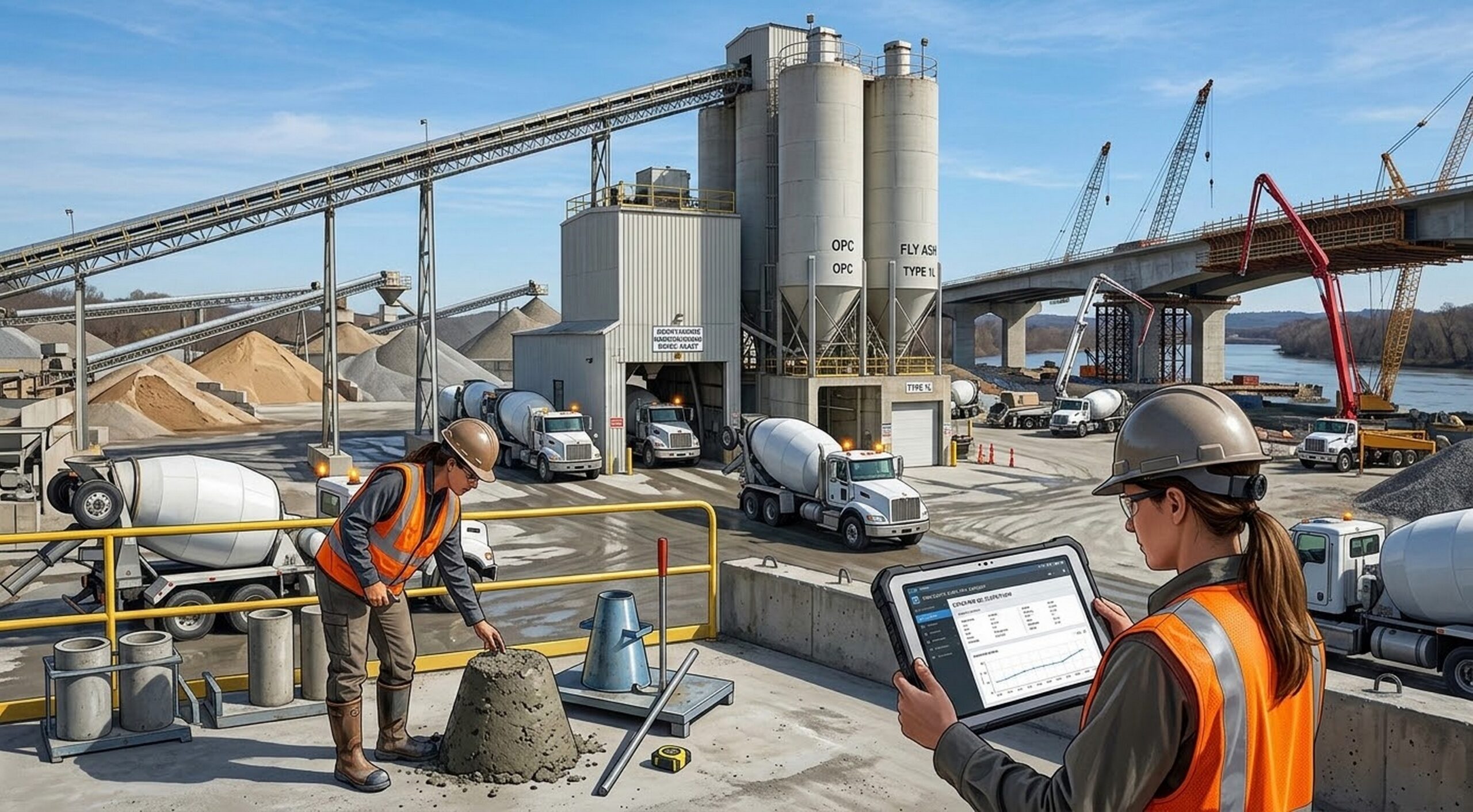
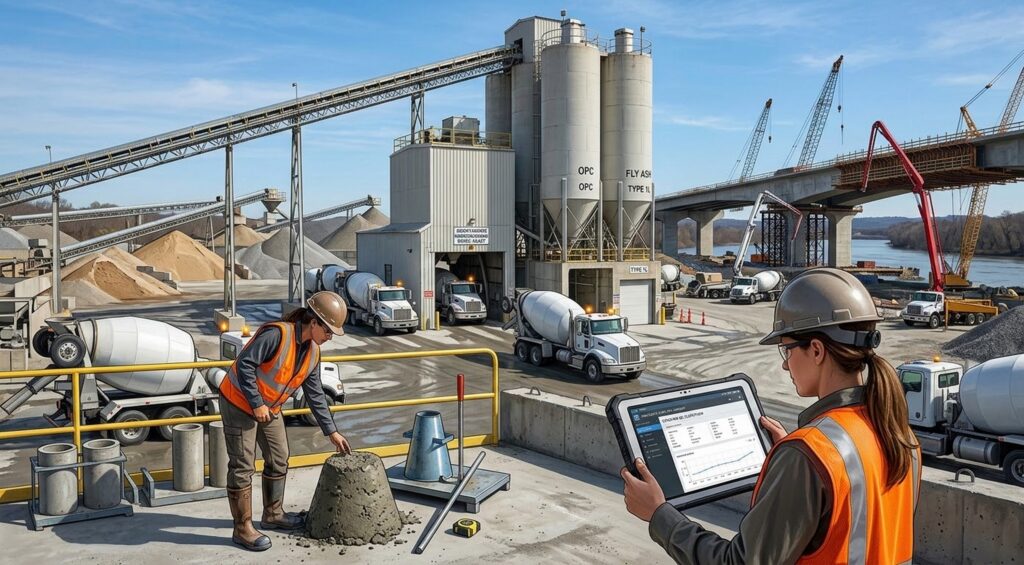
This operational reality has elevated the role of quality control (QC) directors and process engineers. Modern concrete production requires precise, real-time monitoring:
- Admixture Chemistry: Fine-tuning polycarboxylate ether (PCE) superplasticizers and chemical accelerators to maintain slump and workability without delaying set times.
- Digital Hydration Tracking: Using embedded wireless maturity sensors inside fresh concrete pours to track real-time temperature differential and strength development on site.
- Precision Batching: Utilizing automated SCADA batching systems to ensure exact water-cementitious ratios across hundreds of daily mixer truck loads.
3. What This Means for Heavy Industry Hiring and Leadership
The transition toward low-carbon concrete is transforming technical recruitment across the building materials and heavy civil sectors.
Producers and contractors no longer need personnel who simply follow traditional mix recipes. They require forward-thinking technical leaders who understand chemical synthesis, regulatory compliance, and high-volume logistics.
Key roles commanding premium compensation in today’s market include:
- Concrete Process & Quality Control Directors: Specialists who can design, test, and troubleshoot low-carbon mix formulas to meet strict DOT load and durability standards.
- Cement Plant Operations Managers: Leaders capable of upgrading traditional clinker kilns, managing alternative fuel systems, and integrating clay calcination circuits.
- Technical Sales & Product Managers: Commercial strategists who can educate project owners, structural engineers, and contractors on the performance benefits of alternative SCM binders.
The Resource Erectors Takeaway for Heavy Industry Leaders
The ongoing decarbonization of concrete infrastructure is not a distant policy goal; it is an active operational requirement on jobsites across North America. The producers and contractors leading the industry today are those mastering the balance between environmental compliance and structural performance.
By investing in advanced SCM processing, digital batching controls, and specialized technical talent, heavy industry leaders are building the resilient, low-carbon infrastructure of tomorrow.
Ready to Elevate Your Technical Leadership Team?
As the building materials sector accelerates its transition toward sustainable, high-performance products, securing elite engineering and operational talent is crucial for long-term growth.
When you are a heavy industry professional ready to advance your career with forward-thinking producers, don’t let your resume get lost in generic job portals.
Take control of your career trajectory. Submit your resume for general consideration to Resource Erectors today. This places your professional profile directly onto CEO Dan’s short list for exclusive, confidential career opportunities with top-tier industrial producers.
Time to Call Resource Erectors
At Resource Erectors, we specialize in connecting heavy civil, mining, and aggregates leaders with elite talent prepared to drive operational success.
- For Employers: When your company is scaling operations and needs specialized chemical, civil, or plant engineering leaders who understand modern material processing, explore our recruitment services.
- For Professionals: When you are ready to elevate your career with industry-leading employers driving massive domestic growth, browse active listings on the Resource Erectors job board.
To secure top-tier heavy industry talent or map out your next major career move, visit our contact page today.