By the Resource Erectors Team
The heavy industrial sectors, including mining, aggregate production, and civil infrastructure, operate on a foundation of raw mechanical power. For decades, this power has been delivered by the diesel engine, an unmatched workhorse praised for its torque, durability, and operational reliability.
However, the legacy of heavy industry has frequently been challenged by environmental concerns, leading to an aggressive push for cleaner, more sustainable operations. Rather than abandoning the proven platform of diesel power, the industry has stepped up to innovate, dismantling older emission paradigms through advanced engineering.
According to a technical report by the Engine Technology Forum on diesel fuel savings and emissions reduction, modern industrial powertrains have achieved a dual milestone that many historical analysts thought impossible: simultaneously slashing fuel consumption while driving emissions down to near-zero levels.
This technological triumph is primarily credited to the widespread adoption of Selective Catalytic Reduction (SCR) and Diesel Exhaust Fluid (DEF). For operations managing massive fleets, these innovations represent a vital synergy between environmental responsibility and bottom-line fiscal efficiency.
The Chemistry of Clean Power: How SCR Works
To appreciate the impact of modern clean diesel technology, it is necessary to understand the mechanics of Selective Catalytic Reduction. In older generations of heavy machinery, attempts to lower emissions often occurred within the engine combustion chamber through systems such as Exhaust Gas Recirculation (EGR).
While effective at reducing certain pollutants, these internal methods frequently compromised engine efficiency, leading to higher fuel consumption, increased operating temperatures, and accelerated oil degradation.
The SCR system shifts the emissions cleanup process from the engine to the exhaust stream, transforming it into a highly controlled downstream chemical reaction. After the exhaust gases leave the engine cylinder, a precise amount of Diesel Exhaust Fluid—a non-toxic solution composed of 32.5 percent high-purity urea and 67.5 percent deionized water—is injected into the exhaust pipe upstream of a specialized catalytic converter.
When the DEF hits the hot exhaust stream, it rapidly vaporizes and decomposes into ammonia and carbon dioxide. As these gases pass through the SCR catalyst, the ammonia reacts with harmful nitrogen oxides (NOx), breaking them down into harmless nitrogen gas and water vapor.
Because the emissions reduction happens after combustion, engine designers are free to optimize the engine itself for maximum fuel efficiency, peak power output, and long-term mechanical reliability.
Breaking the Fuel-Emissions Trade-Off
The primary breakthrough highlighted by the Engine Technology Forum is the elimination of the historical trade-off between fuel economy and emissions control. In the past, reducing NOx emissions almost always meant burning more diesel.
With SCR technology, the opposite is true. Because the engine can be tuned to its sweet spot for combustion efficiency, modern clean diesel powertrains achieve up to a 5 percent increase in fuel economy compared to older, less sophisticated platforms.
For an aggregate quarry or a major civil construction site running multiple haul trucks, excavators, and wheel loaders around the clock, a 5 percent reduction in diesel fuel consumption yields immense cost savings over a single peak season.
Optimizing fluid consumption is a key factor in maximizing heavy equipment fleet summer efficiency and logistics, as high ambient temperatures place extreme stress on both cooling packages and operational budgets. By reducing the overall fuel burn rate, the system lowers the engine’s total heat-rejection load, helping fleets maintain uninterrupted production cycles in severe environments.
The Operational Logic of DEF Management
Implementing advanced SCR technology across an industrial fleet requires a structured logistical approach to fluid management. DEF is not a fuel additive; it is carried in a dedicated, isolated tank on the machine and replenished during standard fueling intervals. The consumption rate of DEF is highly predictable, typically ranging from 2 to 5 percent of the total diesel fuel burned, depending on the duty cycle and engine load.
Fleet managers must apply the same discipline to DEF quality control as to hydraulic oils and fuel stock. Because the SCR catalyst relies on precise chemical reactions, any contamination of the DEF supply—whether from dust, tap water, or improper storage containers—can foul the catalyst and trigger automated engine derates. In high-velocity sectors where downtime must be eliminated, maintaining clean DEF storage systems and training maintenance crews on proper handling protocols are essential operational routines.
This digital and physical precision mirrors the advanced systems management seen across other primary sectors, such as the remote analytics highlighted in our brief on state of the art technology in the US shale industry.
Securing the Supply Chain for Advanced Manufacturing
The ongoing deployment of clean diesel systems across American infrastructure underscores the critical importance of domestic supply chain resilience. High-performance SCR catalysts require specific metallurgical components and precise engineering to withstand the harsh, continuous vibration of heavy industrial applications.
Ensuring that these components, alongside high-purity urea supplies, are manufactured and managed domestically is a priority for securing the nation’s industrial framework.
This mandate for material independence aligns with our broader analysis of the Tungsten Trench and domestic supply chain autonomy, highlighting that the equipment powering our economy must be supported by a secure, reliable supply of raw materials and technical components.
The Demand for Advanced Powertrain Specialists
The transition to highly integrated SCR and DEF systems has fundamentally changed the role of the industrial maintenance professional. The days of simple mechanical troubleshooting are gone, replaced by a technical landscape that requires a deep understanding of fluid dynamics, chemical dosing systems, and electronic sensor networks.
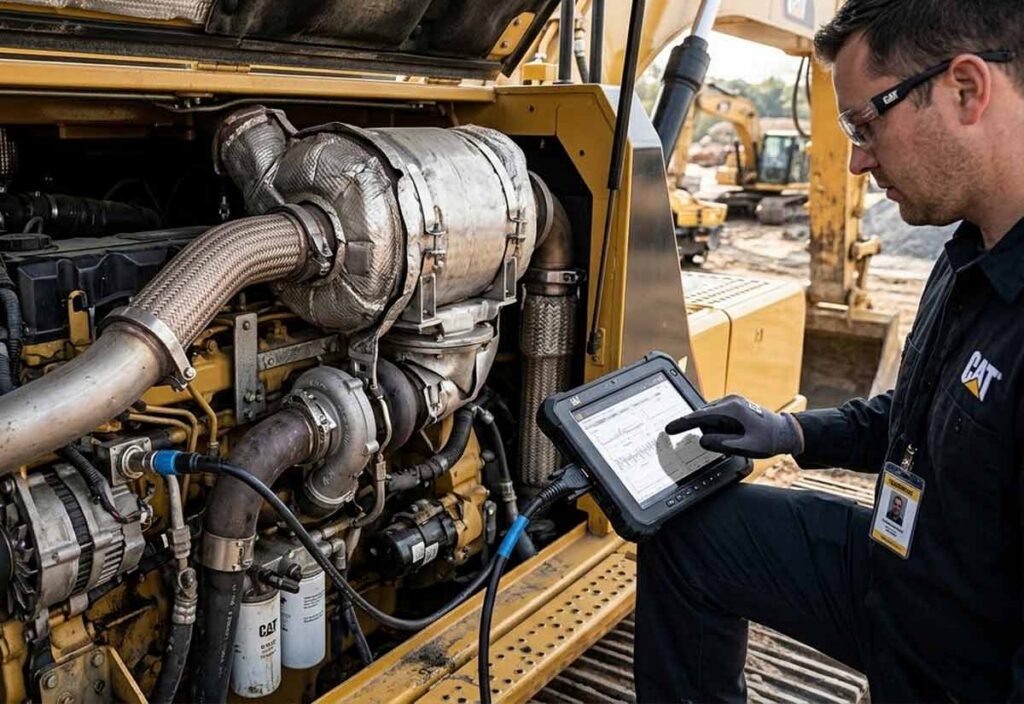
Modern fleet managers and master mechanics must be highly comfortable using computerized diagnostic tools to monitor catalyst temperatures, NOx sensor readouts, and injector spray patterns.
This technological evolution is driving unprecedented demand for advanced powertrain specialists, project managers, and maintenance supervisors with the skills to manage these smart machines. Operations that successfully secure this caliber of technical talent are realizing significantly lower total cost of ownership metrics and superior machine availability.
Conclusion: The Precision of Modern Diesel Power
The integration of SCR and DEF technologies demonstrates that heavy industry need not compromise power to achieve environmental compliance. By utilizing sophisticated downstream chemistry, modern clean diesel technology delivers the massive torque required for heavy civil engineering, aggregates, and mining operations while protecting air quality and slashing fuel expenditures.
As infrastructure projects continue to expand across North America, the clean diesel engine will remain the primary engine of progress. The organizations that embrace these advanced powertrain systems, implement disciplined fluid management, and secure the technical personnel required to maintain them will define the future of high-efficiency, responsible heavy industry.
Submit Your Resume for Confidential Consideration
The rapid technological advancement of heavy powertrain infrastructure, civil logistics, and automated mining operations means that the industry’s most critical engineering and leadership positions are handled through elite, unadvertised channels.
By submitting your resume for general consideration, you place your credentials directly into our database for exclusive Resource Erectors confidential hiring opportunities. This proactive availability ensures you are the first considered for premium, unadvertised roles that require advanced technical expertise and operational grit.
We act as a discreet bridge between top-tier technical professionals and forward-thinking organizations, allowing you to advance your long-term success while maintaining strict career privacy. Register your profile today to access the industry’s most sought-after industrial commands.
Time to Call Resource Erectors
At Resource Erectors, we connect top-tier companies with elite talent across the mining, aggregates, manufacturing, and heavy civil construction sectors. Sourcing the leadership and technical expertise required to manage advanced, high-efficiency equipment fleets is our core capability.
- If you are an employer seeking to fill critical technical or management positions with vetted, high-performing professionals, browse our industry-leading client recruitment services.
- If you are an industry professional seeking to manage your long-term success and explore unadvertised career tracks, explore our available careers and open Resource Erectors job opportunities.
- To discuss your company’s specific talent needs or launch your targeted career search, visit our contact page today.