By the Resource Erectors Research Team
In the strategic chess match for critical mineral sovereignty, all roads in North America eventually lead through the high Mojave Desert of San Bernardino County, California.
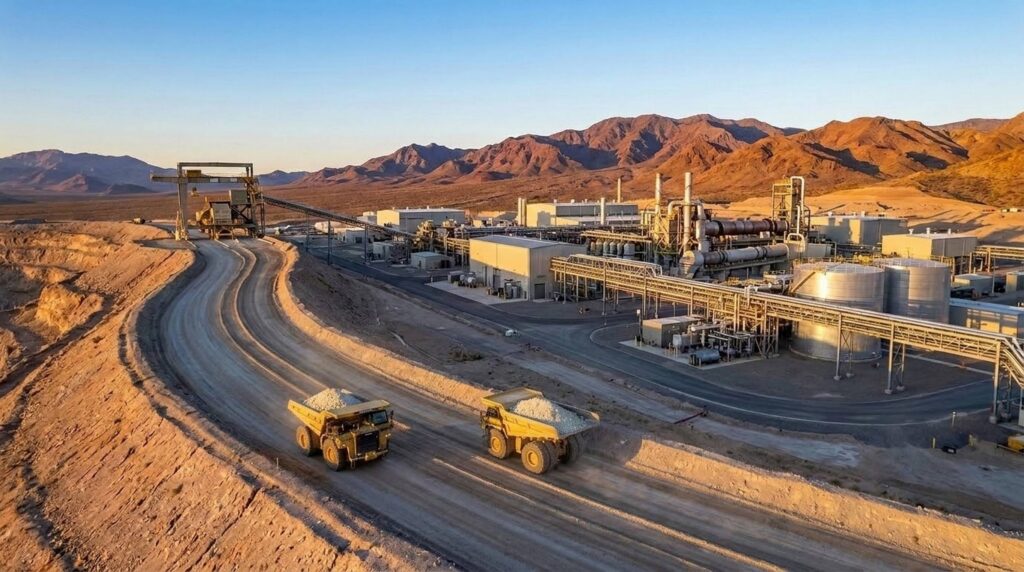
There sits the Mountain Pass Rare Earth Mine, operated by MP Materials. As the only active commercial rare earth mining, processing, and chemical separation site of scale on the continent, Mountain Pass is ground zero for rebuilding a fully domestic mine-to-magnet supply chain.
Yet as Mountain Pass accelerates upstream throughput toward 60,000 metric tons of annual rare earth oxide (REO) equivalent and commissions midstream refining circuits, the physical reality of extraction faces an industry-wide crossroads: the operational and economic transition of heavy diesel haulage.
From Tier 4 Final emissions mandates and volatile fuel pricing to dynamic electric trolley assist and hybrid drivetrains, the heavy equipment moving millions of tons of critical mineral rock is evolving just as fast as the chemical plants processing it.
Inside the Mountain Pass Buildout: Scaling Stages I, II, and III
For decades, Western nations accepted a perilous division of labor: extract raw rock domestically, ship raw mineral concentrates overseas for refining, and buy back finished permanent magnets at premium markups.
Mountain Pass is dismantling that dependence through a disciplined, three-stage operational strategy:
Stage I: Upstream Extraction and High-Yield Flotation
The Precambrian carbonatite deposit at Mountain Pass represents a world-class bastnäsite ore body, boasting an exceptional average reserve grade over 7% total rare earth oxides. MP Materials has perfected open-pit blasting, primary crushing, and fine froth flotation circuits, consistently pushing extraction volumes beyond 40,000 metric tons of concentrated REO annually while executing the Upstream 60K expansion program.
Stage II: Chemical Roasting and Multi-Stage Solvent Extraction
Extracting ore is only the first hurdle; separating individual lanthanide elements is among the most demanding chemical engineering challenges in metallurgy. At the Mountain Pass refining complex, concentrate passes through high-temperature roasting, acid leaching, and hundreds of liquid-liquid solvent extraction (SX) mixer-settler stages.
The primary prize is high-purity neodymium-praseodymium (NdPr) oxide, the fundamental chemical building block required for high-strength permanent magnets.
Stage III: Downstream Metals, Alloys, and Permanent Magnets
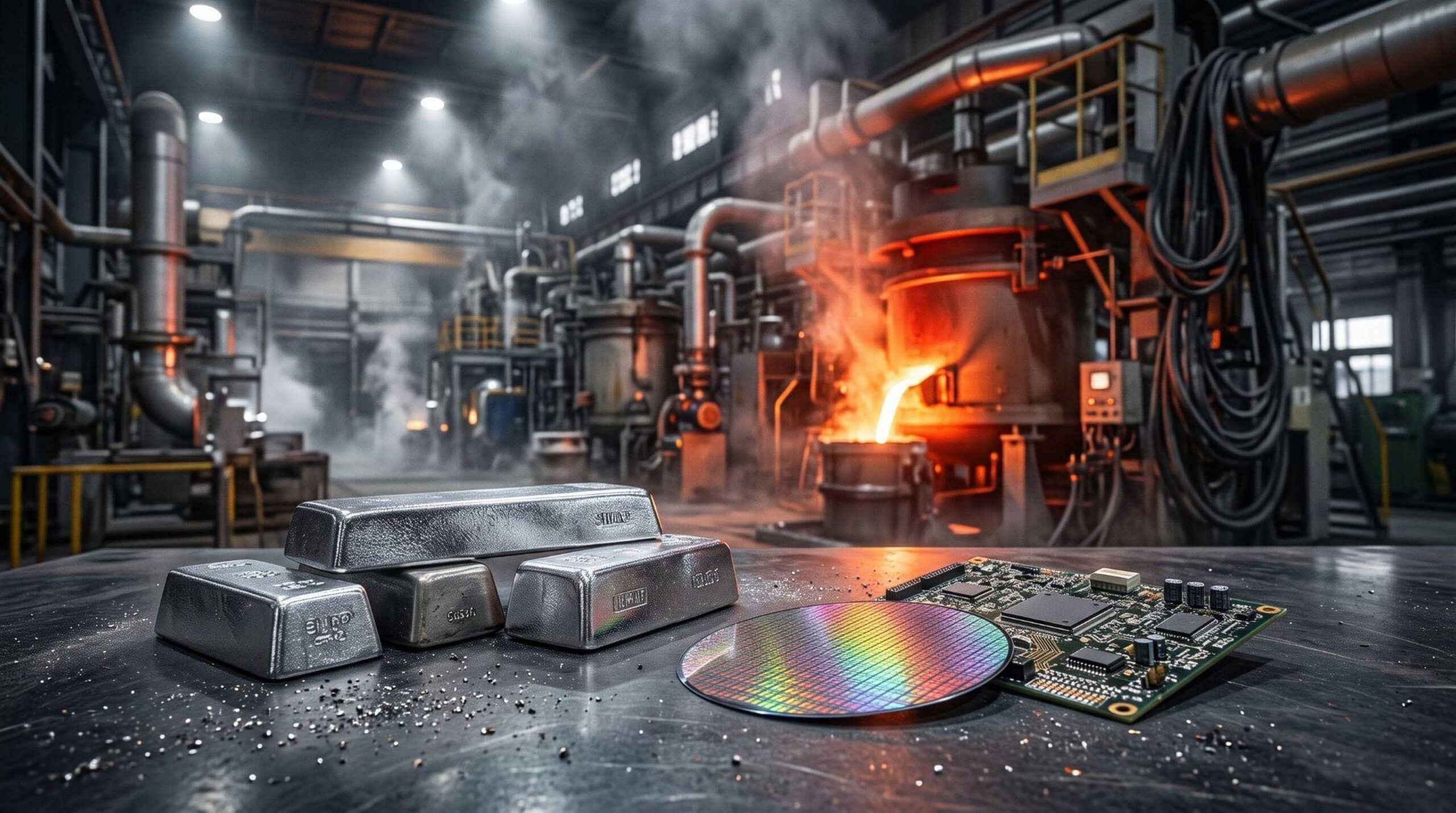
The domestic loop closes at the downstream manufacturing tier. Through facilities like the Independence plant in Fort Worth, Texas, refined NdPr oxide from Mountain Pass is reduced to pure metal, alloyed with iron and boron, and sintered into permanent magnets (NdFeB). These magnets directly power traction motors for electric vehicles, aerospace guidance systems, wind turbines, and defense electronics.
The Haul Road Dilemma: Navigating the Diesel Fleet Transition
While chemical engineers optimize solvent extraction columns, mine superintendents face a pressing mechanical reality on the pit floor: the diesel fuel burn of heavy open-pit fleets.
Moving millions of tons of overburden and abrasive bastnäsite ore requires heavy rigid-frame haulers, high-capacity excavators, and heavy wheel loaders. In large surface mines, diesel fuel represents 30% to 40% of overall cash operating costs. In an era of volatile petroleum benchmarks and tightening regulatory frameworks, mining operations are actively rethinking haulage economics:
- Tier 4 Final and DPM Stringency: Operating high-horsepower diesel engines in open-pit environments demands stringent compliance with Mine Safety and Health Administration (MSHA) diesel particulate matter (DPM) regulations and regional air quality standards. Fleets require sophisticated Selective Catalytic Reduction (SCR) systems and Diesel Particulate Filters (DPFs), adding substantial maintenance overhead.
- The Rise of Trolley Assist and Dynamic Charging: Because haul trucks burn up to 80% of their total fuel climbing loaded out of the pit, mine operators are evaluating overhead catenary trolley lines. By pulling electrical power directly from the regional grid or onsite microgrids while ascending steep ramp grades, haulers double their uphill speed while slashing diesel consumption and engine wear.
- Dual-Fuel and Power-Agnostic Platforms: Equipment manufacturers like Caterpillar, Komatsu, and Liebherr are fielding power-agnostic chassis. These platforms allow mine operators to deploy clean, high-efficiency diesel-electric drivetrains today while retaining the mechanical flexibility to drop in modular battery packs or alternative fuel systems as high-capacity charging infrastructure matures.
Transitioning haul roads away from pure mechanical diesel reliance is not merely an environmental goal; it is a long-term defense of unit cost per ton.
The Upstream Nexus: Connecting Critical Minerals Across North America
The operational momentum at Mountain Pass does not exist in a vacuum. It mirrors an aggressive, coordinated revitalization of the entire North American mineral base.
Just as we explored in our coverage of how the Ramaco rare earth mine in Wyoming is unlocking domestic critical minerals and our analysis of why North American critical minerals require specialized engineering talent, the domestic extraction sector has shifted into high gear.
Furthermore, as equipment giants break records through multi-billion-dollar deals in autonomous haulage and mine electrification, the industry is witnessing an operational convergence where mineral refining chemistry and next-generation mobile fleets advance side by side.
The physical economy requires raw inputs. From rare earth magnets and uranium yellowcake to construction aggregates and structural steel, the United States is actively securing its industrial independence from the bedrock up.
Yet across every sub-sector, the defining hurdle remains identical: capital can procure equipment and buy chemical reagents, but only specialized operational leadership can bring these complex assets to commercial maturity.
The Human Factor: Staffing the Critical Mineral Engine
Operating an integrated rare earth facility and navigating the modern fleet transition requires an elite, interdisciplinary caliber of engineering and leadership talent:
- Extractive Metallurgical Engineers: Specialists with deep expertise in rare earth solvent extraction circuits, hydrometallurgical leaching, precipitate crystallization, and high-temperature roasting.
- Reliability & Fleet Maintenance Superintendents: Mechanical leaders who master modern Tier 4 diesel engine telemetry, electric-drive wheel motors, high-voltage battery management systems, and computerized preventive maintenance scheduling.
- Mine Planning & Civil Pit Superintendents: Seasoned mining engineers who can optimize bench stability, minimize haul road rolling resistance, and sequence multi-year ore extraction through complex geologic faults.
- Environmental & Chemical Compliance Managers: Environmental directors who navigate complex state and federal permitting, industrial wastewater recycling, and air quality compliance.
Organizations that proactively recruit and retain this technical command deck will capture generational market share as domestic supply chains permanently decouple from overseas single points of failure.
The Resource Erectors Takeaway
The continued progress at Mountain Pass proves that American heavy industry can successfully rebuild complex, high-technology extraction and refining capabilities on domestic soil.
Yet as operations scale to meet historic demand, the operational mechanics of the mine site are being rewritten. Balancing high-yield chemical extraction with next-generation, high-efficiency haulage fleets requires more than heavy iron; it requires visionary human leadership.
As the critical mineral race accelerates, the ultimate competitive advantage remains unchanged: securing the elite operational, engineering, and executive talent that turns geology into industrial strength.
Ready to Power Your Critical Mineral Operations?
Whether your organization is expanding mineral separation facilities, opening greenfield processing plants, or modernizing heavy mobile fleets, Resource Erectors is your premier recruitment partner across heavy industry.
- For Mining Employers: Secure proven Mine Managers, Metallurgical Engineers, Reliability Superintendents, and Operations Directors. Explore our specialized client recruitment services.
- For Mining & Engineering Leaders: Take command of your career at the forefront of the North American mineral renaissance. Browse active nationwide career opportunities on the Resource Erectors job board.
- Confidential Placement: Many of our highest-compensation plant leadership and operations director searches are handled confidentially under NDA. To ensure your credentials are on file for unlisted career opportunities, submit your resume for general consideration.
- Connect Confidentially: Contact CEO Dan Duszynski directly to discuss your executive talent needs or career plans by visiting our contact page today.