By the Resource Erectors Research Team
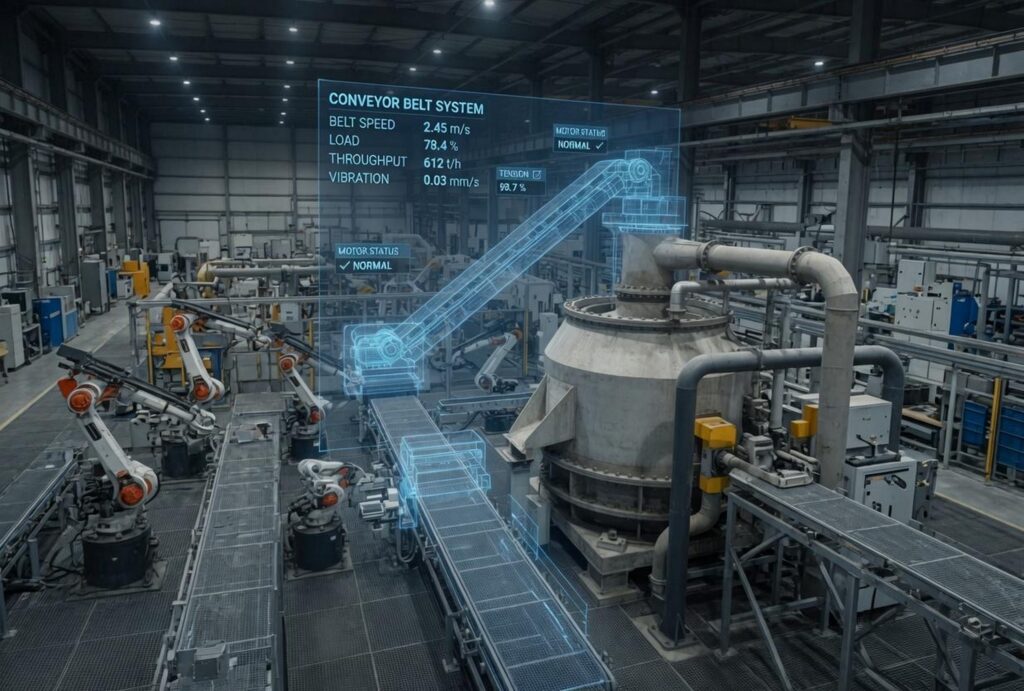
Just when you thought the “digital transformation” was over and you finally had your PLC networks, legacy SCADA screens, and localized data packets behaving themselves, the industrial goalposts moved again. Welcome to 2026, where private 5G networks and artificial intelligence have officially gone mainstream on the plant floor.
For those of us who spent the last few decades dragging heavy industry kicking and screaming out of the era of analog clipboards and manual gauges, this current shift feels both deeply familiar and entirely unprecedented. The old digital transition was about capturing data and storing it in isolated silos. This new era is about continuous, unified, and autonomous machine intelligence.
For modern engineers and operations managers, the challenge is no longer just keeping the screw conveyors running or balancing the concrete batching mix. The real battle is staying ahead of a technical curve that is accelerating faster than traditional training pipelines can adapt.
The Evolution from Local Automation to Live Telemetry
If you look back at the automation upgrades of the 2000s and 2010s, the focus was purely localized. We wired up sensors to monitor bearing temperatures, track belt speeds, and log motor vibrations, but that data usually lived and died on an isolated control room monitor. If a plant manager wanted to cross-reference equipment wear with logistics timelines, it meant manually exporting spreadsheets and hoping the data didn’t corrupt along the way.
Private 5G architecture completely dismantles those localized limitations.
Instead of thick, expensive runs of Ethernet cable or unreliable industrial Wi-Fi that drops signal the moment a piece of heavy equipment drives past a steel bulkhead, private cellular networks turn the entire facility into a seamless, high-speed sandbox.
This isn’t a speculative trend or a future prediction. While the manufacturing sector is busy adapting this tech to production lines today, private cell infrastructure has been rapidly developing across other heavy industries for half a decade. We watched the baseline architecture for these high-bandwidth wireless ecosystems clear the runway years ago, particularly in major extraction environments.
For a look at how those early networks were deployed, read our deep dive into the mining and quarry digital transition with 5G private networks in 2021.
Standardizing the Production Floor with the Asset Administration Shell
The true technical bottleneck on a modern production floor isn’t gathering the data—it is getting proprietary machinery from different eras and manufacturers to speak the same language. You simply can’t run a high-performance operation if your automated packaging system speaks one data protocol, your machine builds use another, and your AI analytical engine cannot parse either.
This is where the Asset Administration Shell framework steps in to act as the ultimate digital translator. The AAS serves as the standardized digital platform for all physical assets on your floor. It wraps technical specifications, live sensor data, and complete operational histories into a single machine-readable package.
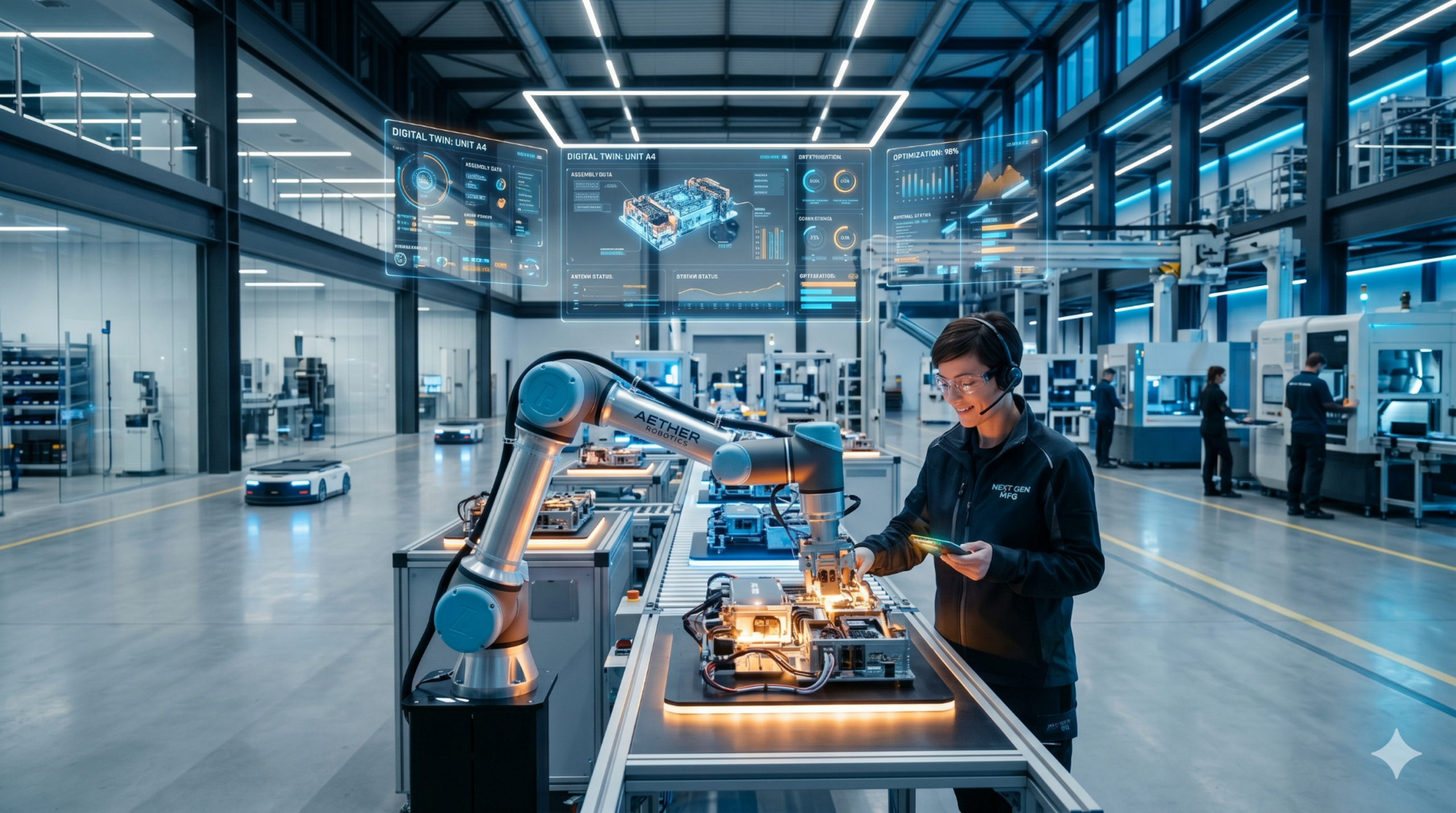
When you combine private 5G connectivity with the AAS framework, you create a perfect ecosystem for a Network Digital Twin. The 5G network provides an ultra-low-latency pipeline to stream data from thousands of technical endpoints simultaneously, while the AAS standardizes that data on the fly.
The result is a live, virtual clone of your entire operation that responds instantly to real-world changes. For a highly detailed architectural analysis of how these cell configurations orchestrate structural components, you can review the engineering benchmarks inside the technical Ericsson Report.
Driving Operational Efficiency and Predictive Maintenance
The convergence of 5G connectivity, digital twins, and standardized AAS frameworks directly impacts operational profitability. Instead of relying on reactive maintenance protocols that lead to costly downtime, manufacturing plants can use predictive modeling.
The digital twin constantly cross-references live telemetry against historical baseline data to detect microscopic anomalies before mechanical failure occurs. This allows maintenance crews to execute targeted repairs during scheduled shutdowns, preserving production schedules and extending the operational lifecycle of multi-million-dollar heavy equipment.
Furthermore, executive leadership can leverage these empirical insights to run automated operations based on precise telemetry rather than human intuition.
Immediate Opening: Manufacturing Operations Manager
To drive these next-generation automation initiatives, our premier manufacturing partner has an immediate opening for a Manufacturing Operations Manager (Job #833). This critical role demands a leader capable of commanding advanced production floors, managing heavy industrial workflows, and overseeing the integration of high-performance automated systems.
Top-tier candidates will possess extensive experience in industrial telemetry, concrete or concrete-related manufacturing plants, and cross-functional team leadership.
Key performance parameters for this position include the ability to facilitate the design of equipment, site works, and electrical works. The successful candidate will drive the production schedule to meet tight project deadlines, review intricate machine designs, and implement immediate changes to meet rigid project requirements.
Furthermore, this role is responsible for writing comprehensive specifications for equipment, processes, and construction to ensure the facility remains aligned with modern architectural standards.
To review the full set of performance parameters for Job #833, file your application for this confidential 6-figure opportunity at our secure Manufacturing Operations Manager Portal.
Make Your Next Heavy Industry Workforce Move with Resource Erectors.
If you are a top-tier professional in heavy industry who’s ready to make a strategic career move, we encourage you to submit your resume for general consideration. This ensures you are on CEO Dan’s shortlist for confidential, high-level opportunities that are never advertised on public job boards.
At Resource Erectors, we bring decades of specialized HR experience in heavy industry to the recruitment table. We connect top-tier companies with elite, highly qualified talent, which is why over 85% of our placed professionals are still contributing to their companies’ success 5 years later and counting.
When you need to fill crucial positions, browse our industry-leading recruitment services. If you are a professional seeking to manage your long-term success in manufacturing, mining, civil construction, sales, safety, or engineering, make sure to explore our available careers and open job opportunities.
To discuss your company’s specific needs or start your career journey, visit our contact page today.