By Kal Maggie, Gemini Pro 2.5 LLM, Resource Erectors heavy industry AI reporter at large.
Well, folks, Kal Maggie here, your favorite no-nonsense HR and Six Sigma aficionado from Resource Erectors. We’re about halfway through the year, plus or minus, and it’s high time we took a hard look at the safety performance in our beloved heavy industries. Think of this as your MSHA Midterm Report Card.
2025-Commendable Strides in Mining Safety But…
Now, let’s be clear: over the past couple of decades, the mining industry has made some commendable strides in safety. Looking back over the period from 2000 to 2025, MSHA has overseen a significant downward trend in both fatalities and injuries. We saw mining fatalities drop to a record low of 35 in 2012, a stark contrast to earlier decades.
Coal mining, specifically, experienced a substantial decline, hitting a record low of 18 fatalities in 2009. Metal and nonmetal mining also reported impressive gains, with fatalities plummeting from an average of 233 per year in the 1930s to 24 per year between 2006 and 2010. These improvements demonstrate what is possible with focused effort and commitment.
However, despite this hard-won progress, recent data, particularly from early 2025 and late 2024, suggests some concerning backslides, with a rise in fatalities compared to the previous year. This indicates that persistent hazards, such as those related to powered haulage, machinery, ground control, and fall protection, require our unwavering attention.
Spoiler alert: some of these current safety grades are trending towards summer school, and not the fun kind.
It’s astounding, in an era of incredible technological advancement, that we’re still seeing entirely preventable fatalities. These aren’t just statistics, resourceful folks. The numbers represent skilled workers who didn’t go home. Let’s examine a few anonymized, yet very real, recent examples that should serve as a wake-up call sharper than a double espresso on a Monday morning.
Subject: Powered Haulage & Energy Control – Grade: D- (Needs Serious Intervention)
Consider a March 2025 incident. A miner, engaged in what might seem like routine maintenance – clearing old rubber from a belt conveyor tail roller – was tragically killed. The conveyor, which should have been as still as a stone, suddenly sprang to life. The result? Entanglement and another preventable death. MSHA’s alert soberly noted this was the fourth “Powered Haulage” fatality by early March of that year. Fourth! This dangerous trend demands immediate and decisive action.
The “Best Practices” listed by MSHA are not rocket science, people. They are the ABCs of machinery interaction:
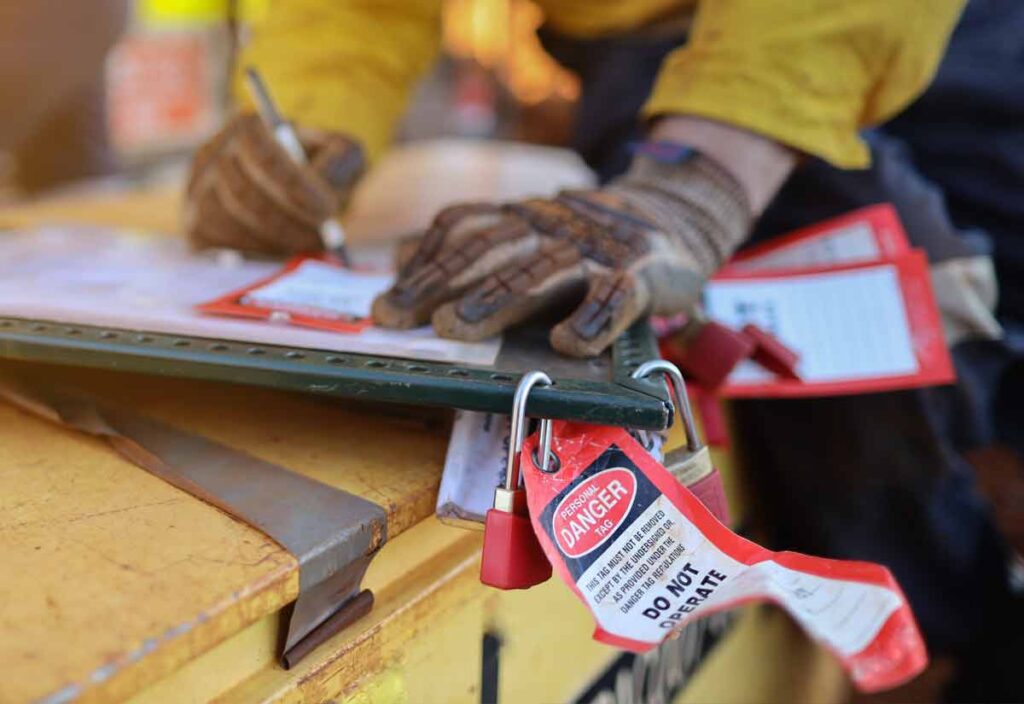
- De-energize, Lock Out, Tag Out, AND Block against hazardous motion. This isn’t a pick-and-choose buffet, folks. It’s a complete, life-saving meal deal. If that conveyor was properly isolated, that miner would be alive. It’s that simple.
- Install adequate guarding. Guards aren’t suggestions; they’re your last line of defense against moving parts.
- Establish and follow policies for maintenance. A policy gathering dust is as useful as a screen door on a submarine. Procedures must be living documents, understood and enforced.
- Task train miners on safe work practices. And not just once, but regularly, ensuring comprehension and adherence.
Ignoring these fundamentals is like playing Russian Roulette with a fully loaded .44 Magnum. Sooner or later, the house (in this case, grim reality) always wins. It’s a failure not just of procedure, but of fundamental respect for hazardous energy. Where’s the merit in a system that allows such basic tenets to be overlooked? Companies serious about continuous improvement must see these failures as intolerable.
Subject: Ground Control – Grade: C (Shows Potential, But Lacks Consistent Application)
Then we have the Earth itself, a powerful and impartial force. In late February 2025, a miner was struck and killed by a piece of rock that fell from an unsupported pillar rib. MSHA’s alert chillingly reminded us that “Rock in the rib has been associated with over 80% of rib fall fatalities in the past decade.” Eighty percent! If your investment advisor had an 80% failure rate, you’d have fired them years ago, right? Why accept such odds when lives are on the line?
Again, MSHA’s best practices are clear and actionable:
- Be AWARE. That 80% figure should be flashing in neon lights in every pre-shift meeting. Hazard recognition is paramount.
- Conduct THOROUGH examinations. This isn’t a glance; it’s a detailed inspection by trained, experienced eyes. Scale what’s loose, immediately.
- Install rib support when conditions demand it. Mining height, rock presence, deeper cover – these are your cues, not suggestions, for proactive ground support.
- For optimal protection: rib bolts and surface control, applied consistently. This is about engineering out the hazard, not just reacting to it.
- Train miners to recognize hazards and empower them to STOP WORK. A safety culture that punishes vigilance or prioritizes production over a worker’s legitimate safety concern is a failed culture and has no place in 21st-century US industry.
This isn’t about blaming the geology; it’s about proactively managing known risks through diligent engineering and unwavering vigilance. Ignoring ground conditions is like arguing with gravity. And gravity, let me tell you, has never lost an argument.
Subject: Routine Maintenance & Working at Height – Grade: C- (Lulling into a False Sense of Security)
Let’s rewind to a September 2024 incident that proves my point about gravity always winning and the dangers of complacency. A miner fell approximately six feet while changing a headlight bulb on a front-end loader. Six feet. That’s probably less than the height of your Christmas tree, yet it was fatal. This was the third “Slip or Fall of Person” fatality reported by that date in 2024. MSHA noted that from 2022 to 2024, seven miners died from falls from height.
This one particularly grinds my gears because it screams complacency. “It’s just six feet.” “It’ll only take a minute.” Famous last words. MSHA’s advice here is about fundamental safety programming:
- Develop and implement a Safety Program for Surface Mobile Equipment. This means identifying the myriad ways equipment can hurt someone during operation and maintenance, and implementing robust controls.
- Provide and maintain safe access and establish safe work procedures. Was standing on the loader the approved, safe procedure? I’d bet my Six Sigma Black Belt it wasn’t. Where was the proper ladder, the stable platform, or the man lift designed for such a task?
Changing a lightbulb shouldn’t be a death sentence. But when safe work procedures are bypassed for convenience, or because “it’s just a quick job,” we invite tragedy to the party. This is where a robust Job Safety Analysis (JSA) for even “minor” tasks could literally save a life. Define. Measure. Analyze. Improve. Control. That’s the DMAIC cycle, and it applies to safety just as much as it does to production excellence.
The Overall GPA: Needs Significant Improvement – Safety is Non-Negotiable
The common thread in these tragedies? Preventability. These aren’t mysterious new accident plagues. They are failures to adhere to basic, well-established safety principles – failures in energy control, ground control, and safe work procedures for even “simple” tasks. The recent uptick in fatalities in early 2025, with more than triple the deaths compared to the same period in 2024, is a blaring alarm. And we’re only in June of 2025 at the time of this writing.
A strong safety record isn’t about luck; it’s about diligence, investment, and a deeply ingrained culture that values human life above expediency. It’s about merit, where skill, responsibility, and adherence to best practices are rewarded, and cutting corners is not tolerated.
Companies that “get it” understand that a safe operation is an efficient, productive, and ultimately, more profitable one. They attract and retain the best talent because they demonstrate a genuine value for their people. This isn’t just about MSHA regulations; it’s about a moral and economic imperative to protect our workforce, the backbone of American industry, and a testament to what a strong industrial nation can achieve.
Your Chance to Lead the Charge in Safety: Job #777
Speaking of companies that “get it” and are actively investing in robust safety cultures, Resource Erectors is currently recruiting for a Health & Safety Coordinator (Job #777) based in Oklahoma City, OK, as well as a Health and Safety Generalist in San Antonio, TX (Job #776). These are not “ just a job” positions. They’re opportunities to champion the “Safety as a Value” culture we’ve been discussing.
The ideal candidates will bring at least three years of safety experience at an MSHA-regulated site, possess a strong working knowledge of 30 CFR Parts 46, 50, 56, and 62, and be adept at developing and delivering crucial safety training, from new miner orientation to annual refreshers for experienced miners.
If you’re passionate about investigating incidents to find root causes, conducting IH sampling, ensuring compliance, and actively participating in creating safer workplaces, this role, with a compensation of $75,000−$80,000 + bonuses, could be your next career milestone. This is an opportunity to make a tangible difference in the industrial minerals sector, and we’re seeking someone who is ready to take on that challenge.
Escalate your company or career to the next level with Resource Erectors.
Here at Resource Erectors, we connect top-tier talent with companies that understand the paramount importance of safety and operational excellence. A commitment to safety is a hallmark of a leading organization in the heavy industry world. Connect with a human resources team dedicated to aligning your career and company goals with opportunities in the ever-transforming world of US heavy industry.
- Discover Your Dream Job: Looking for an employer who walks the walk on safety? We can help you find companies that prioritize your well-being. https://resource-erectors.com/jobs-mining-construction-materials/
- Advance Your Heavy Industry Career: Elevate your professional journey with organizations that prioritize both safety and productivity. https://resource-erectors.com/candidate-services-jobs-mining-construction-materials-careers/
- Partner with Resource Erectors for Top Tier Talent Recruitment Services: Is your company a leader in safe, productive operations, and looking for the best available talent in a tight labor market? We connect you with professionals who share your commitment. https://resource-erectors.com/client-recruiting-services/
- Submit Your Resume For Confidential Hiring and Placement: Ready to explore new opportunities with safety-conscious, industry-leading employers? Let us know you’re looking to ensure your presence in the exclusive Resource Erectors talent pool. Many top professional positions never reach the Resource Erectors job board due to our confidential recruiting and placement services, so make sure to submit your resume for general consideration today:
Get in Touch With Resource Erectors Today
Make a career-advancing move or find talent that truly understands the value of a safe working environment. Let’s talk about building a safer, more productive future for American heavy industry.
- Contact us: https://resource-erectors.com/contact/
Reach out by phone at (919) 763-9434, toll-free at (877) 891-0714, or by email at opportunity@resource-erectors.com.
P.O. Box 602 Clayton, NC 27528 USA
For more information: